

Listen, I love kids. I have friends with wonderful children. I even type these words from a teen summer camp where I’ve worked for 20 years.
But for the most part, the people I hang out with are not having kids.
I’m talking about people who are…
in their mid 20s through mid 40s
politically left or centrist
broadly counter-cultural, norm-questioning, and non-religious
hailing from middle- or upper-middle-class backgrounds
A few years ago, I shared my own conflicted thoughts about having kids, all of which remain true.
What follows isn’t really about me. Rather, it’s an amalgamation of many long discussions and little observations I’ve gathered over years of exploring this topic with friends in North America and Western Europe.
This isn’t an argument against having kids, nor is it an indictment of parents. This is armchair anthropology: my attempt to capture the broad spirit of the Millennials and elder Gen Z who I’ve come to know.
Spoiler: I don’t think it’s just about money, housing, universal preschool, or paid parental leave. Even in countries with more wealth and family-friendly policies, fewer people are having kids.1 I think the financial arguments come second to the cultural arguments. Even if the kind of people I’m discussing had more money and owned a big house outright, I believe most of the following points would apply.
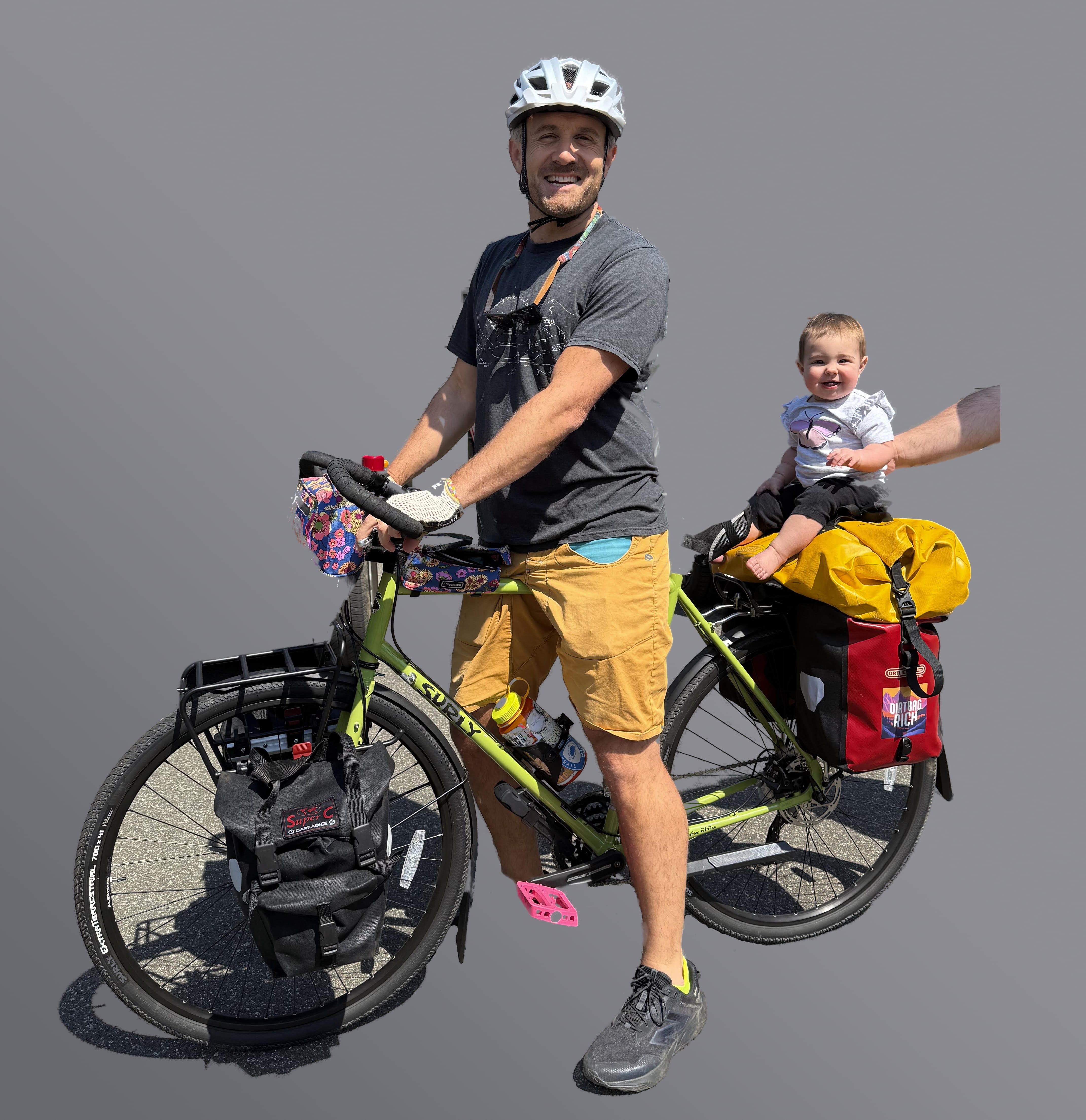
We want to “live our lives”
The world is vast, and we want to experience it.
We seek a huge variety of transformative experiences in our twenties and thirties: visiting multiple countries, pursuing our interests, experiencing many loves, and hopefully attending a few really good parties.
Many of us want to explore careers that prioritize meaning over money: activism, art, writing, music, small-scale entrepreneurship, grad school, and non-lucrative science.
Many of us want to explore identities beyond the standard heterosexual nuclear family: different sexual orientations, relationship styles, and gender roles.
All of us consume media that provides endlessly inspiring images of our peers enjoying niche hobbies, traveling the world, and taking adventures that are clearly incompatible with the demands of family life.
More than anything, living our lives means doing what we want, when we want. We cling to a fundamental sense of autonomy and control over our lives. We’re loath to give it up quickly or easily.
We have mixed feelings about gentle parenting
Among my social milieu, “gentle parenting” is the default.
This isn’t a well-defined term. It’s not the same thing as “free-range” parenting, nor does it always overlap with “permissive parenting.”
Rather, I’m describing the widespread expectation to engage with young children in a particular way that renders sustained thinking and adult conversation impossible.
Here’s how the sociologist Annette Lareau captures the spirit:
Middle-class parents spend much more time talking to children, answering questions with questions, and treating each child’s thought as a special contribution. And this is very tiring work. Yet this is work that few parents feel they can in good conscience neglect.2
In the brief moments that we (the childless) witness modern parenting in action, we often witness endless child-parent negotiations, bedtimes extending far into the night, and adult conversations interrupted every 30 seconds by a child’s inquiry. If a parent doesn’t seriously address every such interruption, the cultural message seems to be: you’re disrespecting, mistreating, or borderline-traumatizing this child.
Everyone knows that kids can be difficult, yet we sense that modern parents’ hands are tied. Our social group doesn’t approve of “putting kids in their place” with physical or verbal aggression. Nor are other members of society “allowed” to discipline your kids or set hard boundaries with them. This leaves most of the pressure on the parents, who seem to be constantly suppressing their anger, performing incredible feats of multitasking, or getting steamrolled by a toddler.
We recognize that this kind of parenting may offer a powerful and transformative personal journey—and it’s not necessarily a journey we want to undertake.
Gentle parenting seems utterly exhausting, yet we cannot imagine any other way to do things. “Childhood trauma” seems so easy to inflict—especially if we’ve spent time imagining all the ways it might have been inflicted upon us—that we genuinely believe we have the power to screw up our kids for life. Why risk it?3
If there’s one way to guarantee that we can continue thinking and speaking without interruption, not confront our anger, and not feel guilty about potentially traumatizing an innocent creature, it’s this: not having kids in the first place.
We occupy a moral high ground
Ever since the 1960s, the environmental movement has provided moral cover for going child-free.
We believe that our impact as resource-consumers and pollution-emitters is significant, and the ethical burden exists more in individual choices than industry, government, or collective action.
Each new human on Earth is one more potential meat-eater, car-driver, long-haul-flight-taker, and imperfect-sorter-of-recyclables. We haven’t even reconciled our guilt with our own situation, so how can we imagine adding a mountain of disposable diapers to the equation?
Yes, more kids on Earth means more potential problem-solvers of environmental challenges. But raising a little eco-warrior is a big responsibility. What if they turn out to love steak and snowmobiles? It’s easier to tell ourselves we’re doing “the right thing” by not contributing to population growth.
And if the world is going to fall apart in the near future, as many people in my social circles seem to believe, then we can absolutely occupy the moral high ground by not bringing another suffering human being into it.
We don’t live near family
Most of us have moved far away from family for purposes of work, love, culture, or affordability—which means we don’t have automatic childcare in the form of grandparents, aunts, uncles, and extended family.
Even when we do have family nearby, they increasingly have their own lives, priorities, and engagements that don’t include “free babysitter,” like traveling, enjoying their retirements, or continuing to work for money.
Of course, childrearing support can also come from neighbors, hired help, parent groups, and other “alloparents”—but such people are hard to find, organize, or hire. Again, we’re more likely to witness parents struggling on their own than enjoying a laid-back, collective childrearing situation.
The more that the burden of childrearing falls on the nuclear family, the more that becoming a parent feels like a high-stakes proposal.
We spend more time dating
We expect more from our romantic partners before procreating—which makes sense, given the high stakes. We spend years looking for the right person, years in a relationships, and years recovering from our break-ups.
Even when we’re in a stable, long-term relationship, many of us decide to pour love into a fur baby rather than a human baby, doting over our dogs and cats with the same affection (and significant monetary investment) we might otherwise give to children.
No one is telling us differently
Finally, and crucially—essentially no one is telling us to have kids.
We live in a world in which pretty much everyone supports and nurtures our decision to do what we want, whether that means waiting to have kids, “seeing how it goes,” or not having kids at all.
If we have ovaries, we might receive somewhat stronger questions or get bombarded by pregnancy-positive social media in our thirties. If we have testes, we may feel like our time horizon for making a decision is infinite.
No matter who we are, there’s not really anyone in our lives who is sitting us down and saying, “you should get started on this project now.”
Our parents—themselves reeling from the pressure they may have felt from their own parents—have supported us unconditionally in our life paths. Our grandparents have learned not to pressure us into producing grandchildren.
This situation isn’t good or bad—it just is.
We’re busy doing other interesting things with our lives. We’re worried about our capacity to raise kids in the infinitely patient manner our social worlds demand. We’re concerned about the environment. Our support networks are scattered far across the city/state/country/world. We’re getting to know our possible co-parents. And no strong institutional forces—neither family nor religion nor peer pressure—are forcing us to reconsider our priorities.
So little of this is about money. If anything, these are products of affluence: the ability to choose from a variety of interesting life paths, spending time worrying about global issues, and living far away from family (rather than remaining bound together by poverty).
This is what I’ve observed in my world. Is it what you’ve seen, too? Your comments, public and private, are welcome.
See this conversation between Derek Thompson and Penn economist Jesús Fernández-Villaverde, my Facebook thread about that conversation, and this 2023 article about Sweden’s failure to permanently raise birth rates despite significant government spending.
See All Joy and No Fun: Why parents hate parenting by Jennifer Senior (2010).
Among my friends who have had two or more children, the worry about “screwing up kids” seems to dissipate—so I’m mostly talking about the concerns of brand-new parents.
Blake, I loved reading this, and partly because my own reaction surprised me.
I understand so much of what you're describing. I've never been someone who thinks people should have children, and I would never encourage someone who's unsure to do it. And there have been plenty of moments in my own life when I've regretted becoming a parent.
But reading this I found myself feeling... sad. Which was really surprising to me. Not because I think you're making the wrong choice. I don't. It was more this feeling of, you have no idea what you're missing.
And I've been thinking about why I reacted like that.
I think there's something in what you write about wanting to live your life, and wanting adventures and transformative experiences. Because most of those experiences, even when they change us completely, are still things we choose. We choose the country, the work, the relationship, the project, whatever it is. We choose the door.
And also, we can leave.
I'm a huge fan of quitting things I don't like. 😂 Really. I don't see much value in staying with something just because I started it. If it isn't right for me anymore, I will happily change direction.
But then you have a kid.
And you can't really do that anymore.
You make this enormous decision and then this person shows up, and you have absolutely no idea who they are going to be. You don't choose their personality. You don't choose what they will need from you. You don't know what they will struggle with, what they will challenge in you, what parts of yourself you will have to face because of them. You don't even know what kind of parent this particular child will require you to become.
And you can't say three years later, well, turns out this wasn't really my thing. You can't hand them back to the universe and go choose another adventure.
You're stuck with each other. 😂
And I'm realizing there is something really profound about that. Not because I think staying is always good. I really, really don't. But because maybe some transformations can only happen when we can't just walk away when it gets too difficult or uncomfortable or when it doesn't look anything like what we thought we were signing up for.
That is certainly what happened to me.
My son didn't fit the world in the ways I had expected him to. And because he was my kid, I had to deal with that reality. I had to start questioning things I probably would never have questioned otherwise. Eventually that led me to start a school, and then another one, and eventually into the work that has become my life's work.
I could never have chosen that adventure. I didn't even know it existed.
And I think that's maybe the dimension I was missing when I read your piece. There is the adventure we choose, and then there is what can happen to us when another human being enters our life who we did not choose (except for choosing to have them), cannot design, cannot control, and cannot just walk away from when things get really hard.
My son is turning 21 in a couple of months. And it's not like we've arrived anywhere. He still struggles with life. There are still things that come up where I'm very much his mom. I still don't know where any of this is going.
But oh my god, Blake. Reading this made me realize how incredibly glad I am that I couldn't give him back.
I'm so grateful this particular human showed up. I'm grateful for who he is, and for all the places his existence has taken me that I would never, ever have chosen because I didn't know they were there.
And of course I have absolutely no idea who I would have become without him. Maybe other things would have transformed me just as much. And none of this makes me think that everyone should have kids. I still don't think that.
I just know I wouldn't be this person.
And your piece made me realise how incredibly grateful I am for that. For the whole fucking difficult, wonderful, unplanned thing.
So thank you. I didn't expect to discover that about myself when I started reading. ❤️
I started wondering if I wanted a child at 35. By 37 I was clear and decided to become a single mother by choice (smc). There are so many wonderful choices out there. My son recently asked "when did you become you?" My answer was "when I decided to have you". Lots of paths out there.