

On September 25th, the final day of my North American bicycle tour, the sky opened, and all the rain I’d avoided for six months came crashing down.
I awoke in an Airbnb just north of the Canadian border, where I wrote postcards to everyone who hosted me on my journey (34 in total), videochatted with a loved one, and charged my introvert batteries after two weeks of warm, joyous, and relentless socializing in British Columbia.
Cycling southward at 8:30am, the mist turned into rain and the droplets grew greedy. The heavens poured at the US border as I waited in line with automobiles, slowly soaking through my windbreaker, helmet, and bike shorts. Upon witnessing my drowned-rat appearance, the border guards seemed extra friendly, as did the passing motorists along the mostly shoulderless roads of Whatcom County.
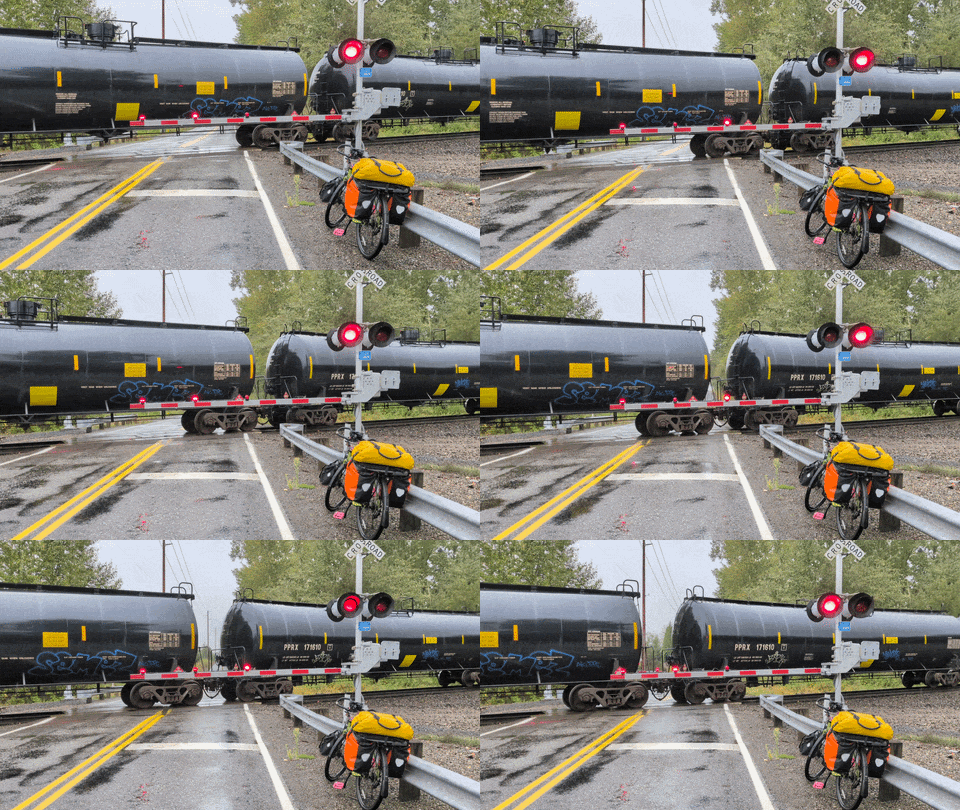
Inside the Blaine Post Office I mailed my postcards, donned a warm layer, and unsuccessfully sought a place to pee in nearby bushes. Pressing on, the rain lightened for a fortuitous moment as a stationary train blocked the road. Perched on a guardrail, I pressed half an avocado onto an everything bagel, wondering what mysteries the jet-black tankers contained. Licking the final poppy seeds from my fingers, the train began creaking forward, and the heavens resumed their previously scheduled programming.
My socks were waterlogged, I was only warm when pedaling hard, and my lower back was giving me grief. But fundamentally, I was fine—everything was fine. As a light breeze liberated wet leaves and the passing vehicles thinned out, my mind began flowing freely. I thought of the wonderful climber-dancers of Squamish, BC, with whom I’d just spent a week. I conjured many of the faces and landscapes that marked my journeys in New England (April), Colorado (May), Utah (June), California (July), Oregon (Aug), and Washington (Sept). I conducted mock debates with two European ex-girlfriends and three emotionally inscrutable male family members.
My attention turned outward when I entered the Lummi Reservation and started passing broken-down cars and aging trailers surrounded by vine-covered trash piles. I felt as if I were suddenly in another country: one with much lower income, fewer zoning laws, and a whole different way of doing things—which isn’t far from the truth.
The United States, I was again forced to remember, contains multitudes. When we stop thinking in averages and start looking at how much income, debt, and free time most Americans possess (relative to the amazingly high cost of food, rent, and insurance), we may discover that we’re actually a nation of poor people—albeit one talented at convincing ourselves, with television, movies, and social media, that we are rich.
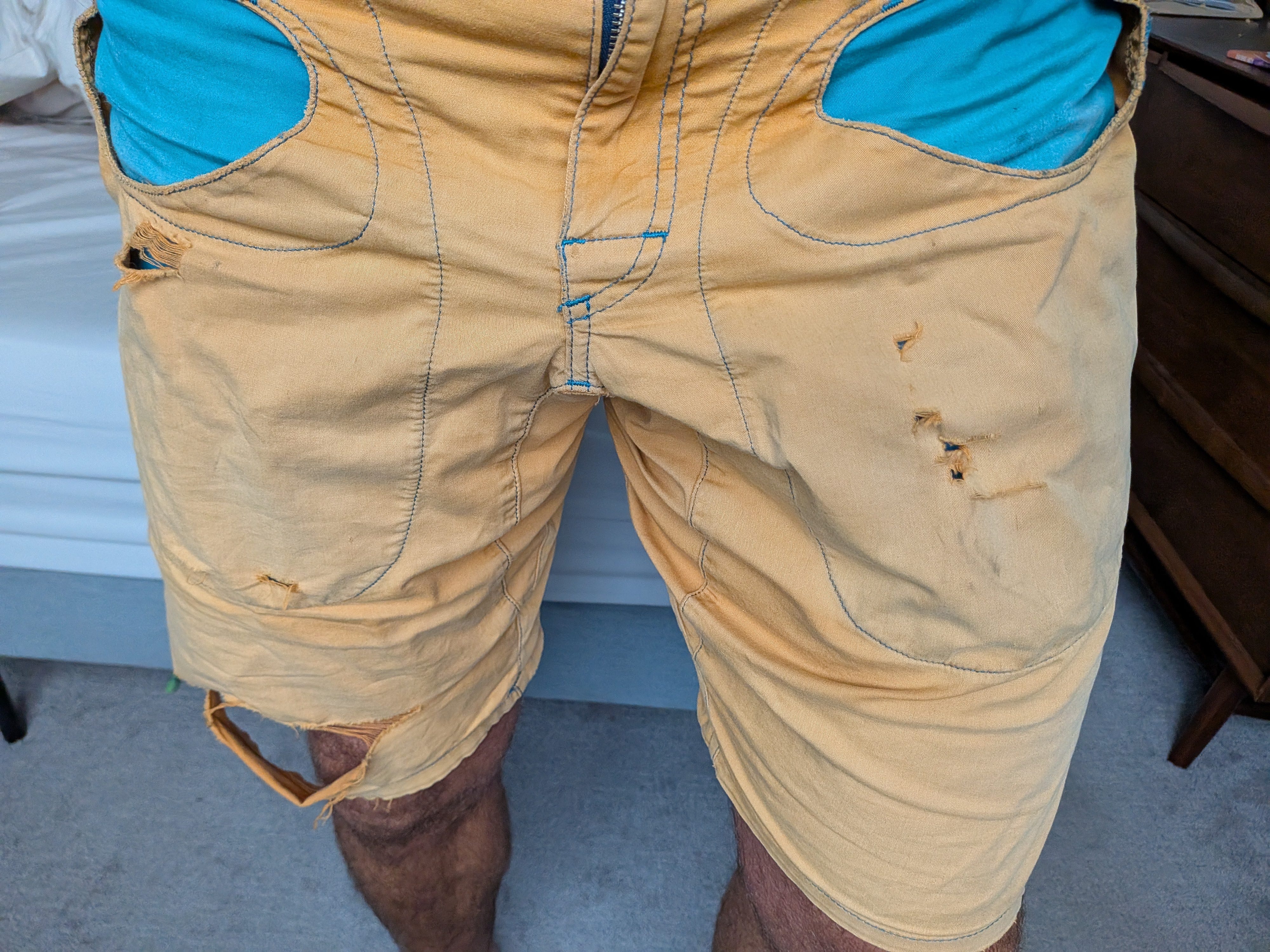
Yet today I felt free—absolutely free.
Not free in the “I want to do this forever” sense: I’m ready to stop bicycle touring for a while. (Cold rain helps with this.) Nor free in the “anyone can do this” sense: bicycle touring remains very much a White Dude Freedom.1
I also didn’t feel free in the sense of “I can easily stop traveling and settle down tomorrow”: the houses I passed in my journeys, in both big cities and little mountain towns, apparently cost upwards of US$700,000, which is $4,700/month these days.2 (I earn around $1,000-3,000/month.)
Rather, I felt free in the sense of possessing an open horizon, expansive community, and regular moments of full aliveness.
Cycling through the first real autumn day in the Pacific Northwest, I felt free to remake my life, much as I did at age 20 when I walked away from research science and then the prospect of becoming a traditional schoolteacher. “Shit, where’s my security now?” I asked myself at that tender juncture. “How will I fund my life?” It took five years of confused wandering, false starts, and seasonal gig work before I eventually started Unschool Adventures, published my first book, and found a semblance of stability-in-motion. What if I’d panicked and retreated to security? I probably would have been “fine.” But fine is not the same as free.
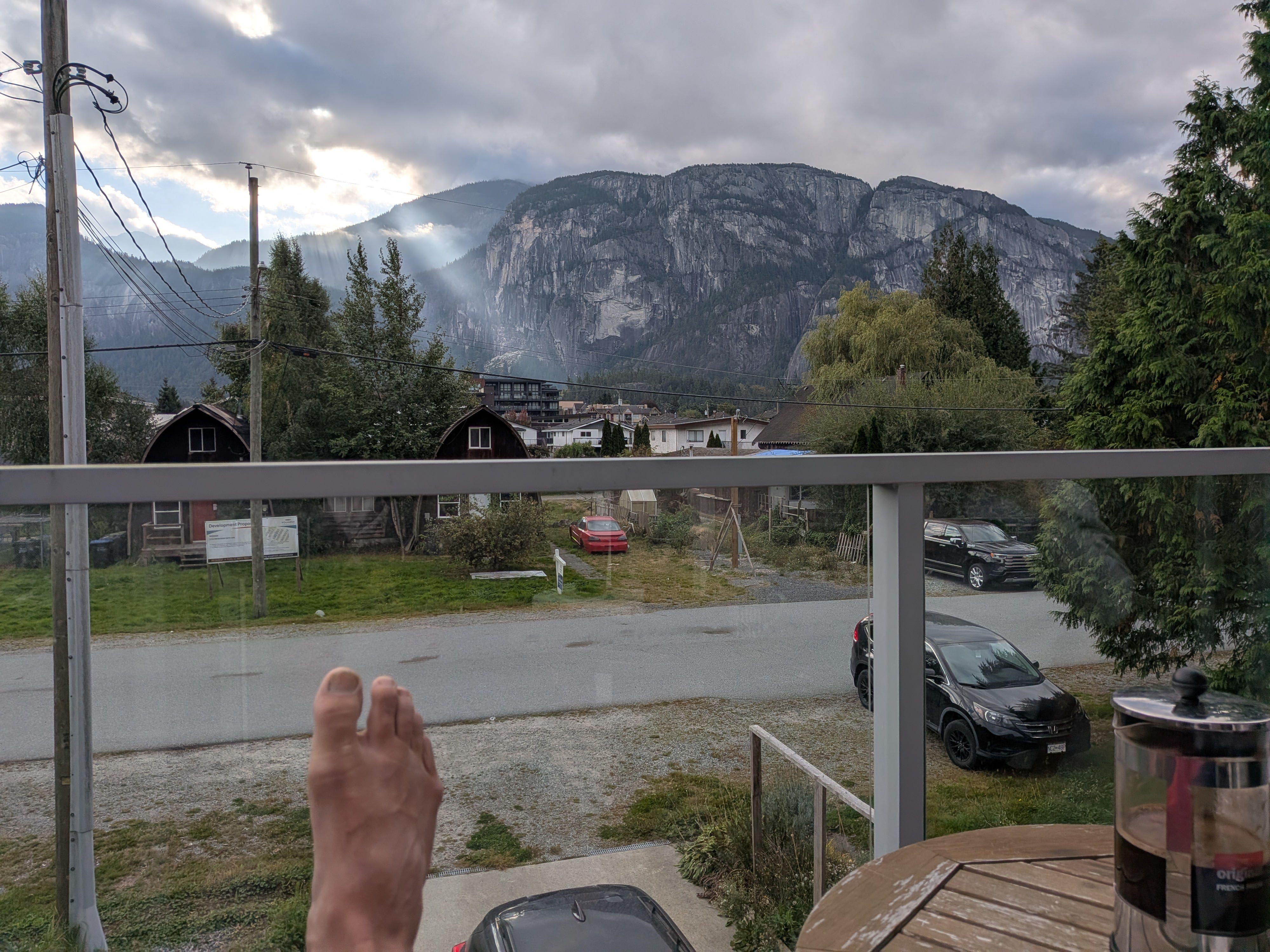
When I started this North American journey, I didn’t expect to hit pause on my teen trip-leading company. But that’s what happened, and it is liberating.
I’ve got a few marketable skills (writing, teaching, organizing) and a high savings-to-spending ratio, so I don’t worry for my long-term future. I nevertheless panicked and immediately attempted to run some rushed, last-minute teen workshops (both online and offline). When those didn’t fill, I could truly begin relaxing—because the world’s indifference granted me a certain kind of freedom.3
The British poet Wendy Cope captures this fundamental openness—the freedom that is always available to all of us—in New Season:4
No coats today. Buds bulge on chestnut trees,
and on the doorstep of a big, old house
a young man stands and plays his flute.

I watch the silver notes fly up
and circle in blue sky above the traffic,
travelling where they will.

And suddenly this paving stone
midway between my front door and the bus stop
is a starting point.

From here I can go anywhere I choose.
To understand and promote such fundamental freedom—a freedom that young people often don’t experience despite their obvious thirst for challenge, adventure, and connection—is why I got involved in experiential and alternative education 25 years ago, and five years later, started working at Not Back to School Camp.
This August I put the bicycle away for two weeks to serve at Not Back to School Camp once again, delighting in the same deep staff friendships, zany camper antics, and ritual bonding activities that blew my world open at age 23.
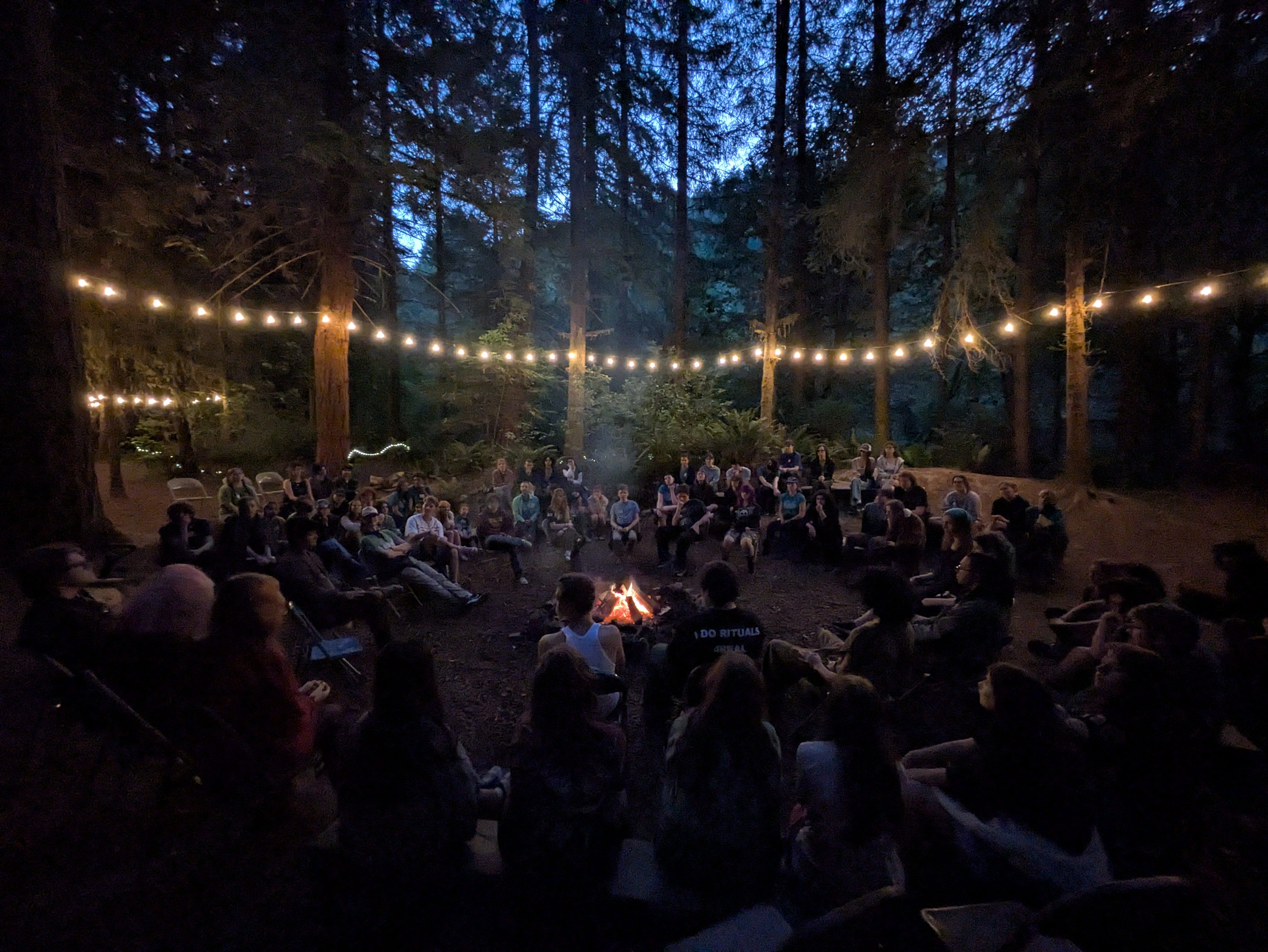
Despite the shifting sands of unschooling culture and the retreat of free-range childhood in the US, Not Back to School Camp continues to offer a rare island of deep autonomy for both teenagers and adults. As a staff member, I’m empowered to offer pretty much any workshop that I see fit—which this year included Welcome games (3 sessions), Connection games (mild, medium, and spicy), All the ways to throw a frisbee, You are lightly evolved ape hurtling through the void on a barely inhabitable rock (the history of the universe delivered over a single lunch, co-led with Nathen Lester), Why we don’t have kids (workshopping ideas for my recent post), Coworking with vibes, Fun partner dance moves for prom (also with Nathen), and How to go on cheap adventures with camp friends.
What if we all got to teach what we’re passionate about—and learn from the impassioned—on a regular basis? What if passionate curiosity were an explicit virtue of the education system, rather than a tired, bureaucratic platitude? What might school then be, and who might we become? Such questions still enchant me.
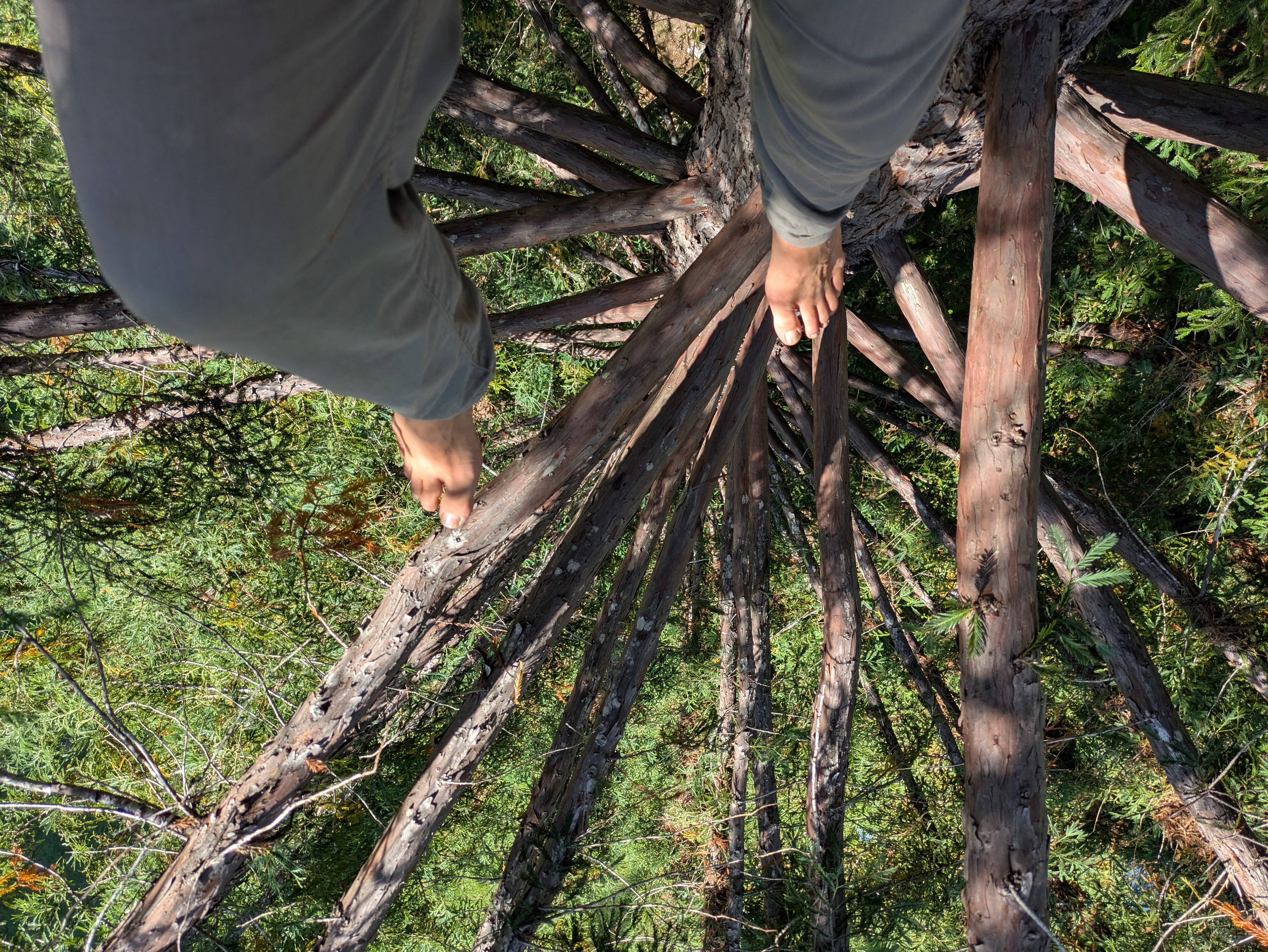
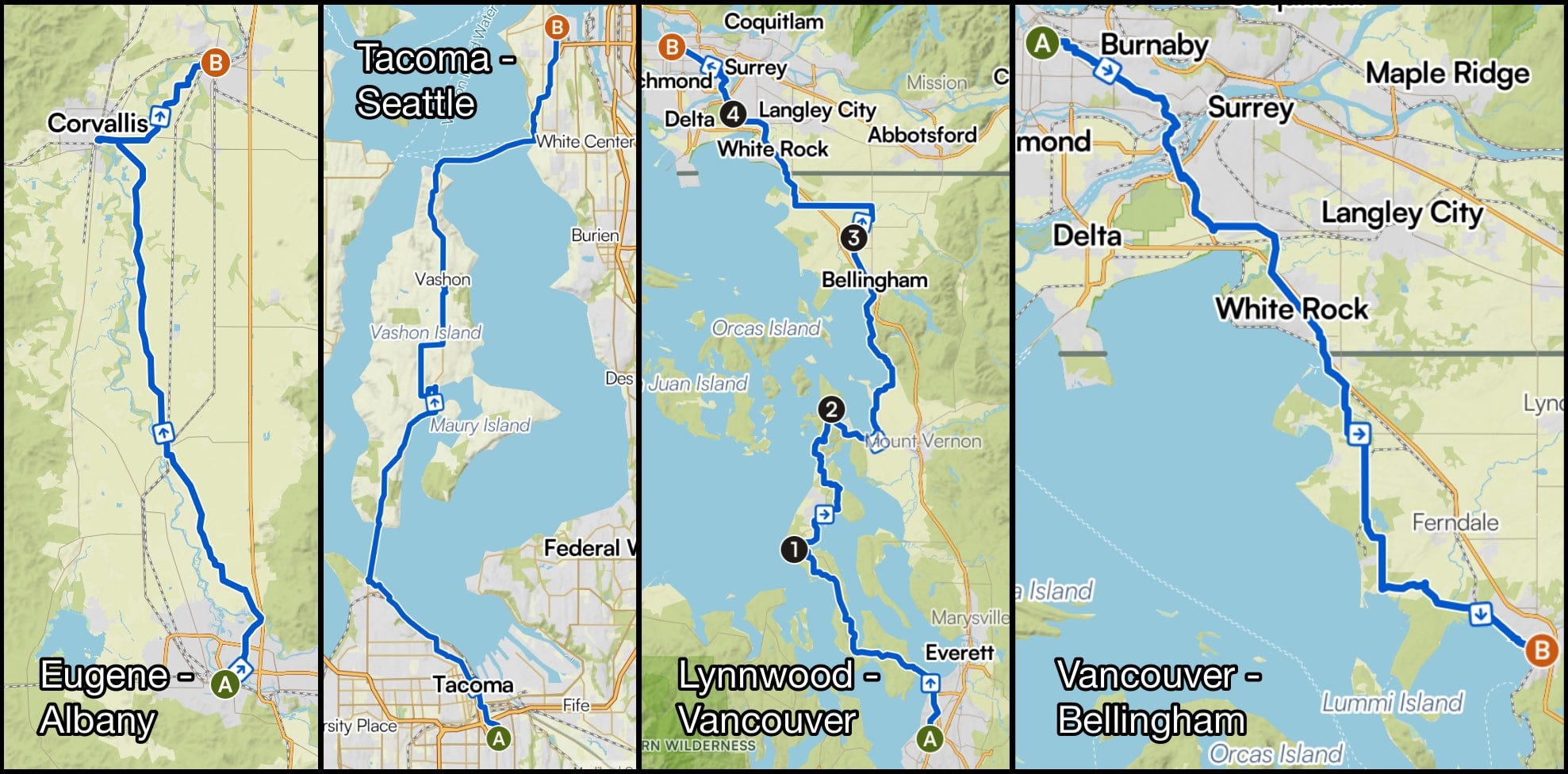
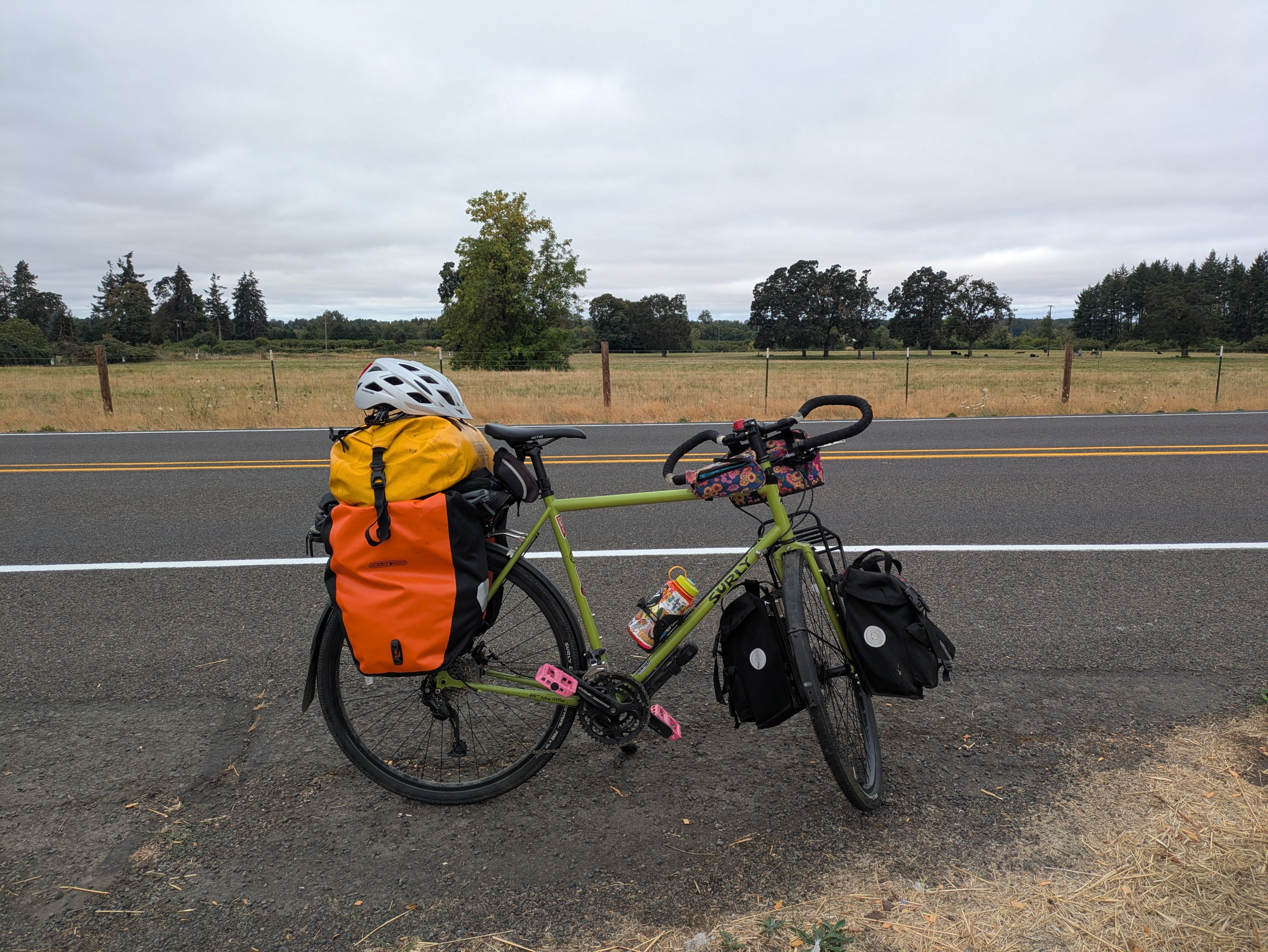
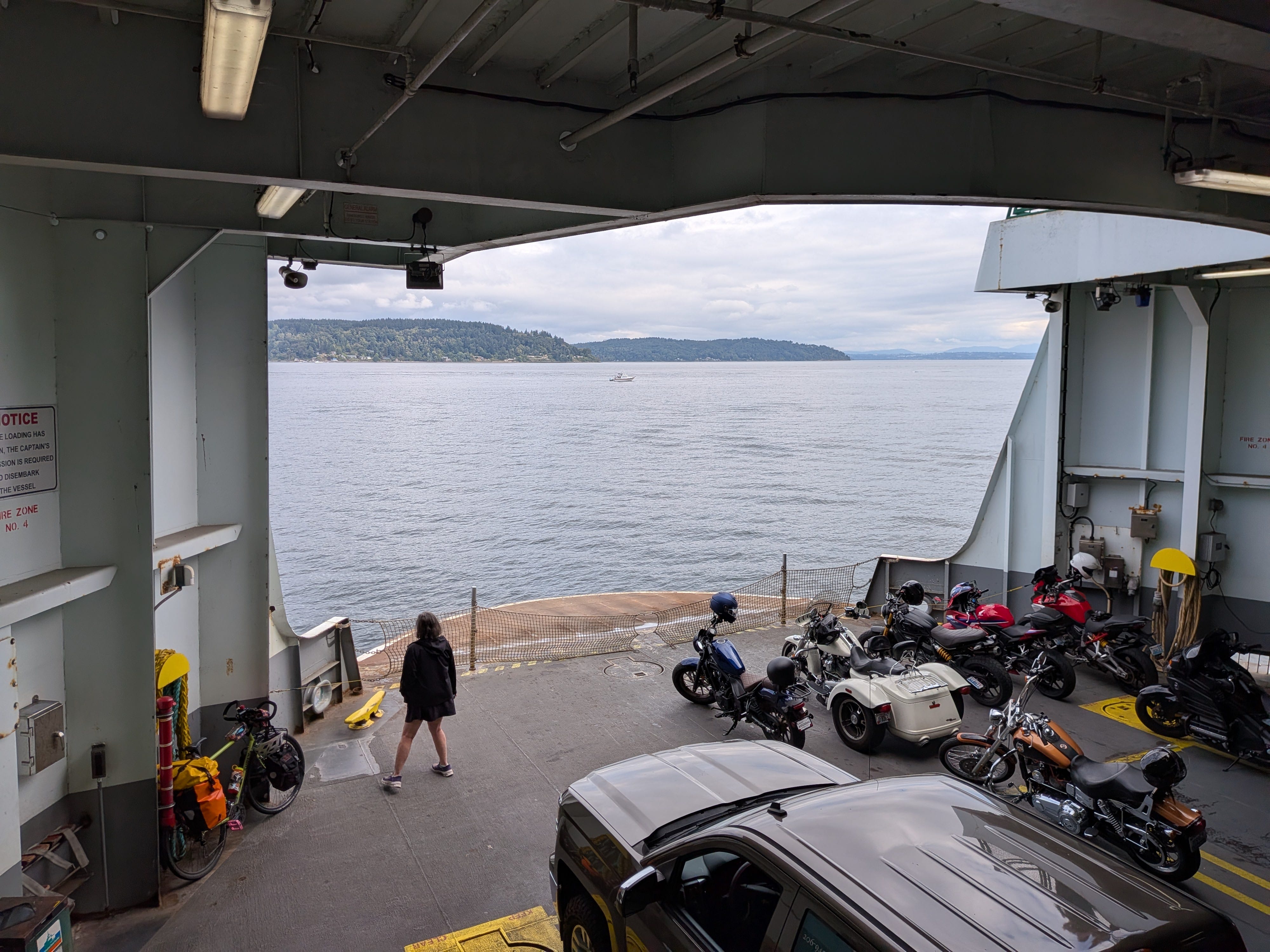
Riding between Oregon and British Columbia was pleasant enough. I’ve cycled in the Pacific Northwest before, and while I enjoyed getting to know Vashon and Whidbey Island, I was also happy to skip big sections with the help of Amtrak, Seattle light rail, and friends’ personal vehicles.
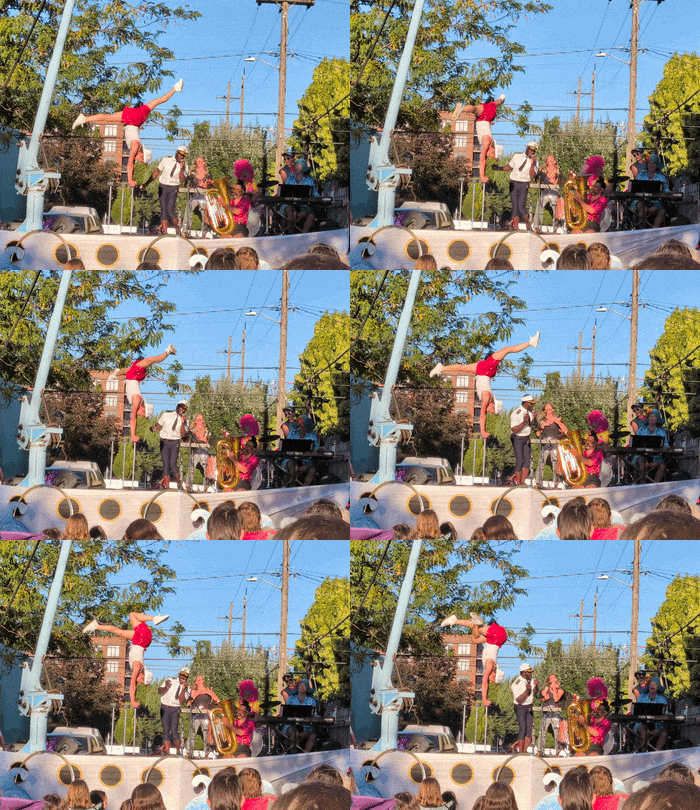
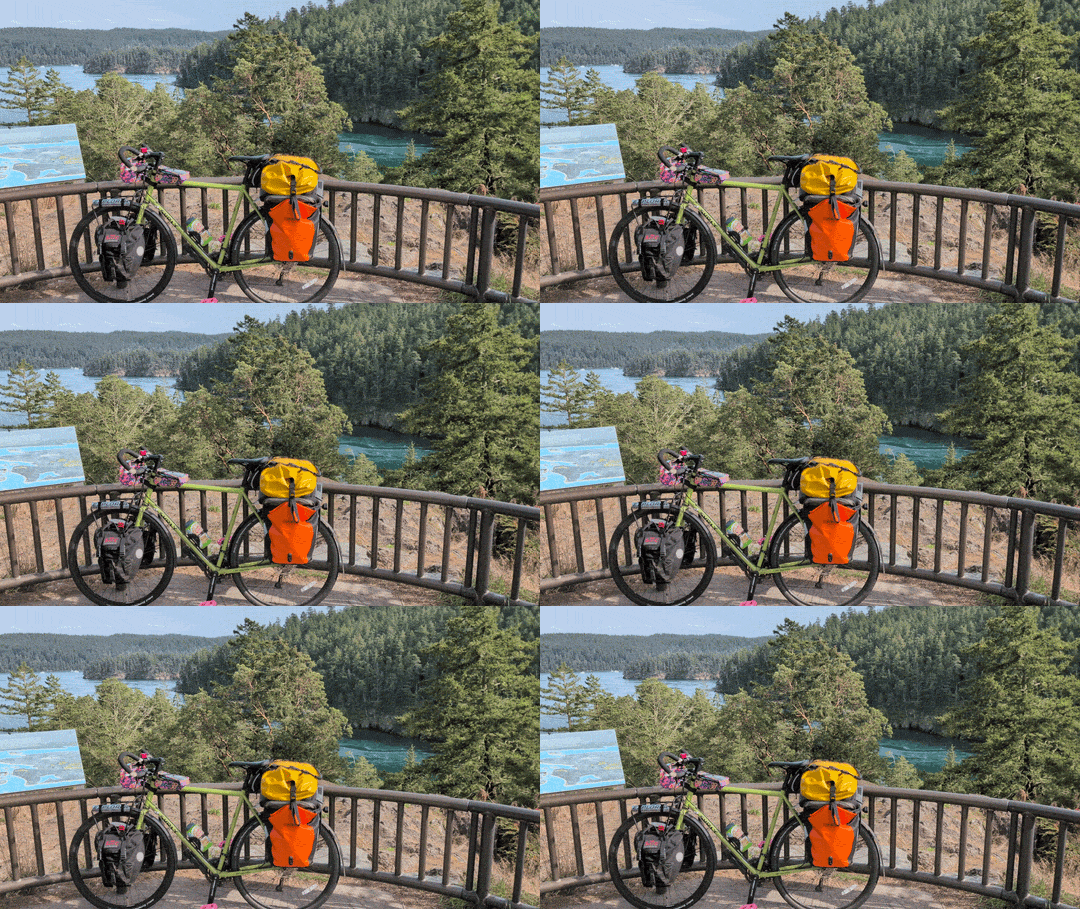
In Eugene, Corvallis, Portland, Tacoma, Seattle, Bellingham, and Vancouver I crashed with many old friends: some with fun young kids, others actively planning for children. On a spectacular day in Seattle, a reader and her spunky 6-year-old bought me Mexican food and ice cream. In Anacortes, a Warmshowers host insisted on taking me out for sushi. Another reader, a passionately curious young man, invited me to his family’s house north of Bellingham where we cooked yams, corn, hot dogs, and grilled cheese atop a pit fire. And amongst the public art of a gorgeous park in Vancouver, I reconnected with an old internet friend-turned-badass bachata dancer, Tam.
But the journey wasn’t complete until my old friend Hannah picked me up in Vancouver with her white adventure van, drove me up the Sea-to-Sky Highway, and deposited me in her new home of Squamish, British Columbia: the closest thing to a Shangri-La of mountains & dance I’ve yet discovered.

How to describe Squamish? It’s a destination outdoor town with a major ski resort just up the road (Whistler-Blackcomb) and a granite massif (The Chief) slapping you in the face every time you turn around. It’s cute, small, bikeable, expensive by Canadian standards, reasonable by US standards, and an absolute paradise for dirtbag climbers, hikers, runners, scramblers, skiers, and mountain bikers.
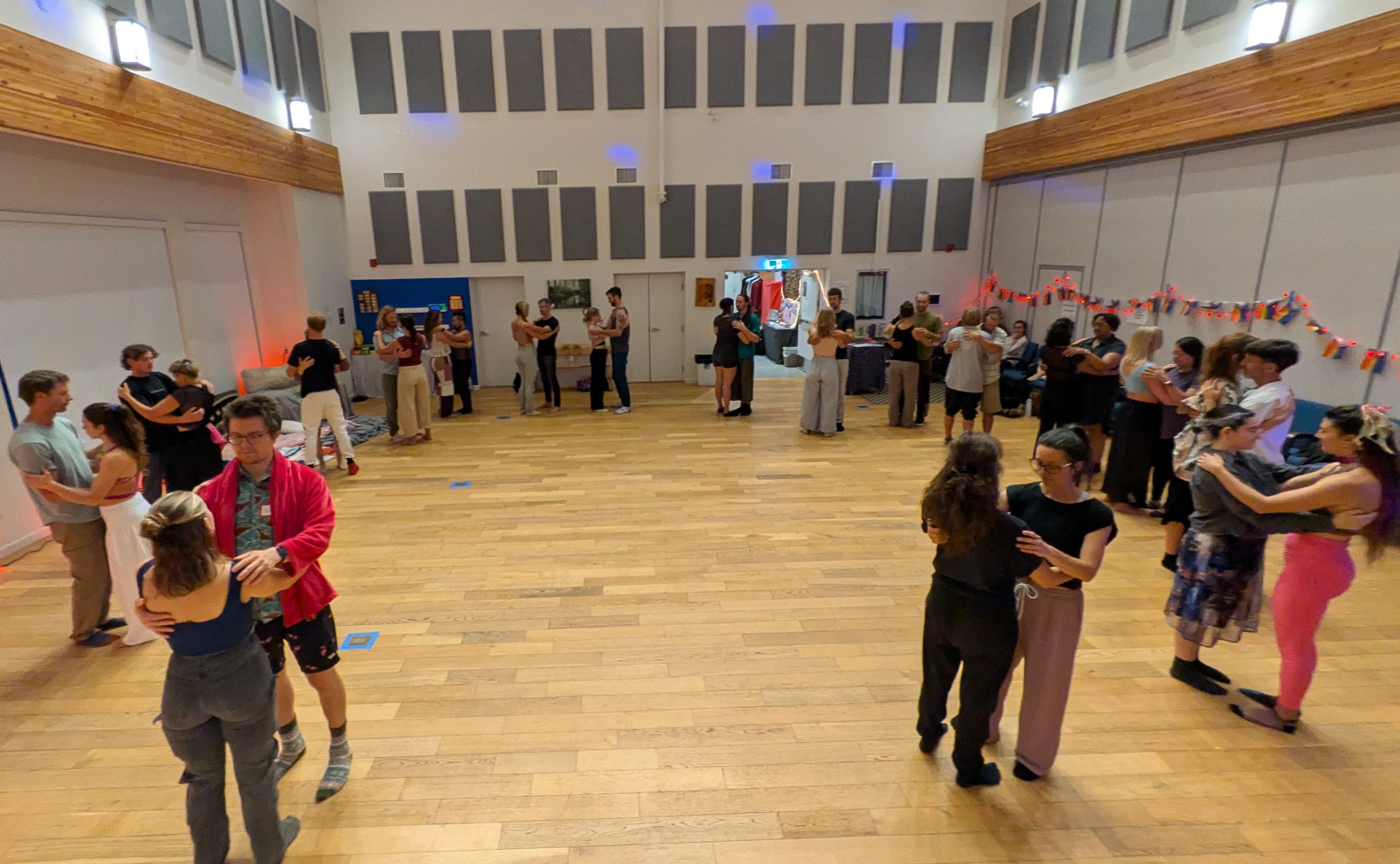
And as of two years ago, thanks to the efforts of a few passionate individuals, it’s full of fusion dancers—I kid you not.
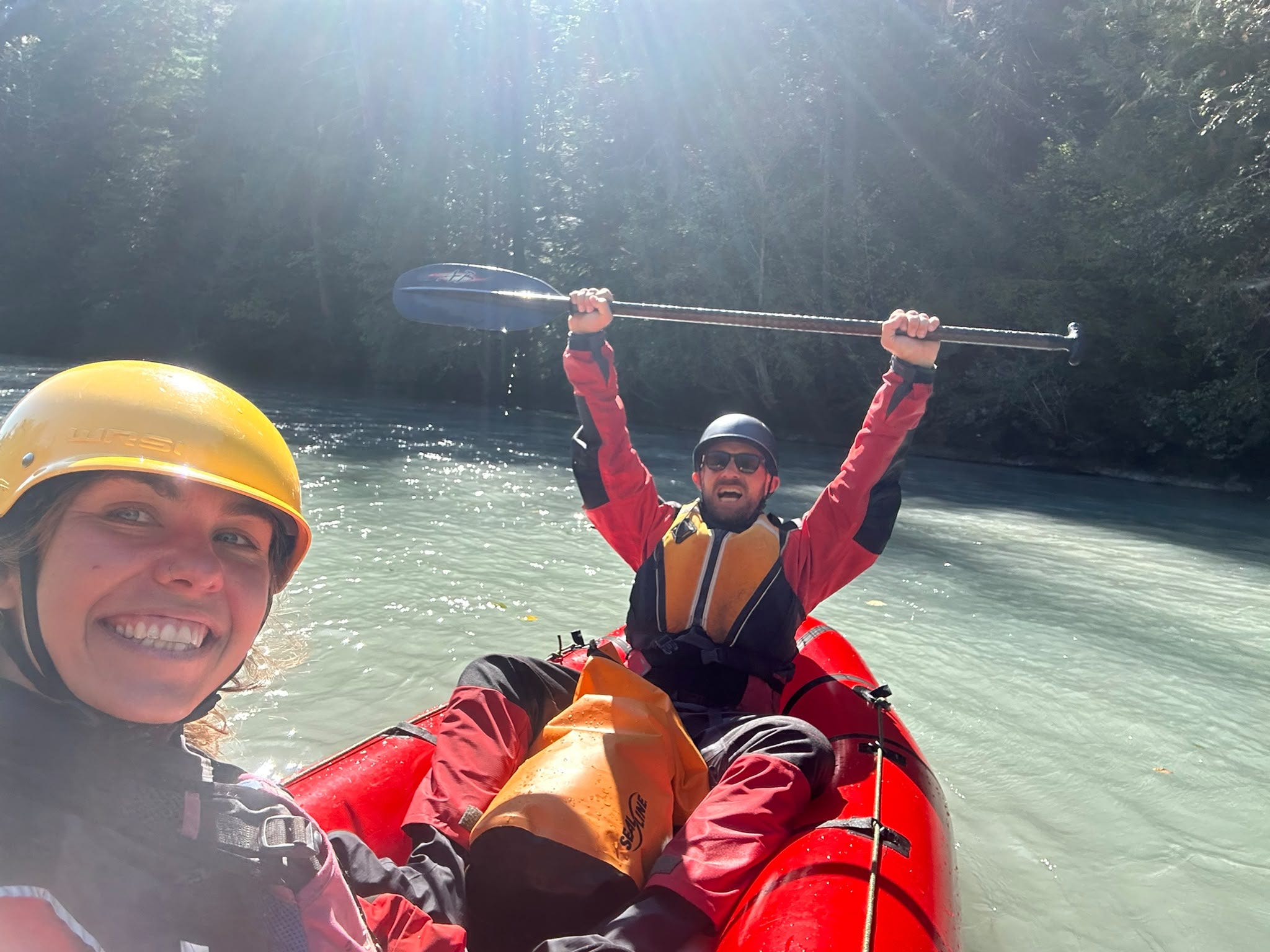
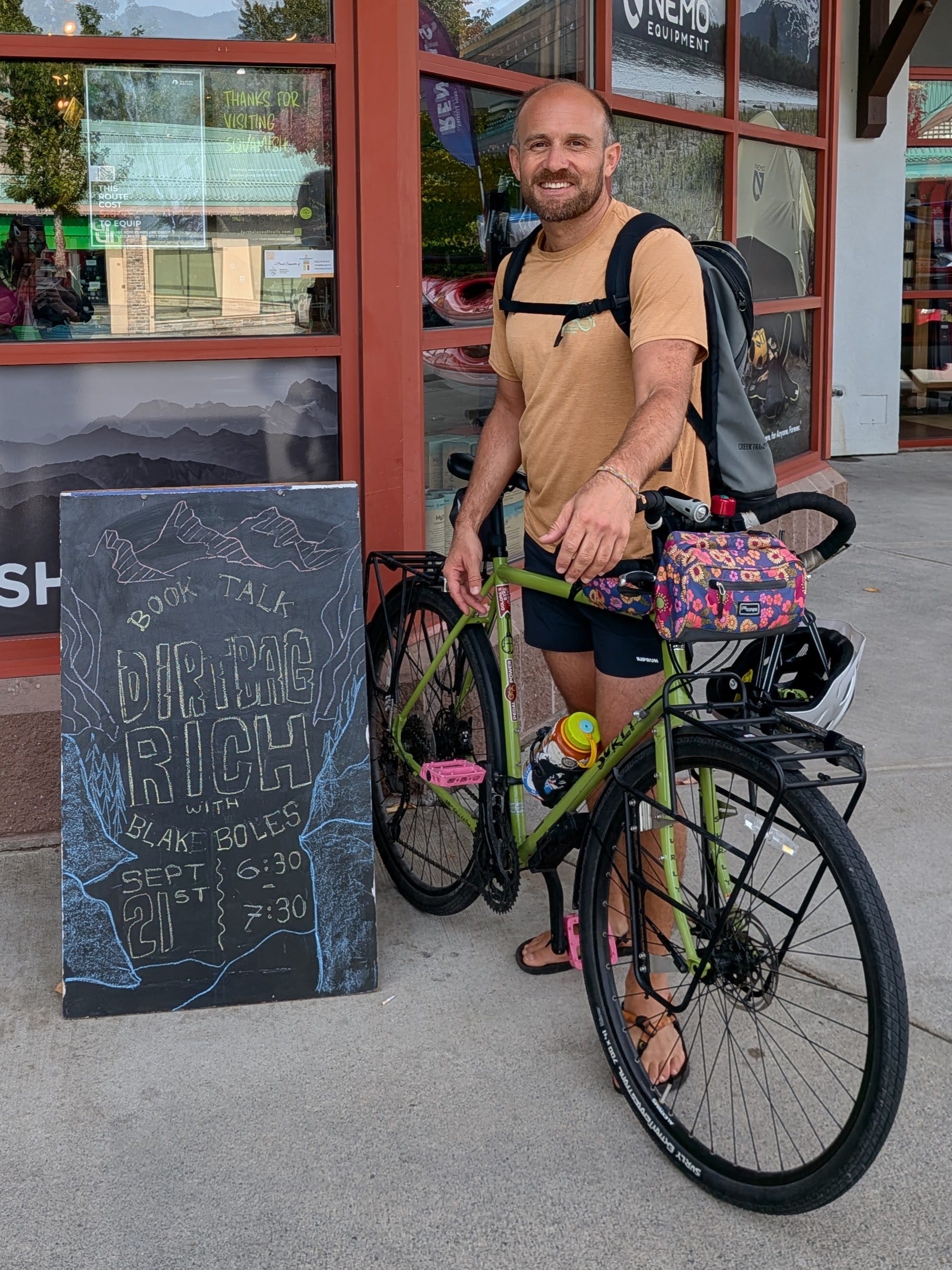
Back in March I met a gaggle of Squamish-based climber-dancer-travelers at a fusion dance camp in the UK. These nice people (plus Hannah) formed a glorious nucleus of community that let me drop straight into connection, adventure, and free housing, making my one week in Squamish feel like a month. I hiked, danced fusion, DJed fusion, taught microfusion to a group of 35, talked about Dirtbag Rich at an outdoor gear store, taught a tango private lesson, skinny dipped, cooked dinner for my hosts, packrafted for the first time on my 44th birthday, and finally, biked around town like the tooth fairy, delivering free copies of Dirtbag Rich to my new friends.
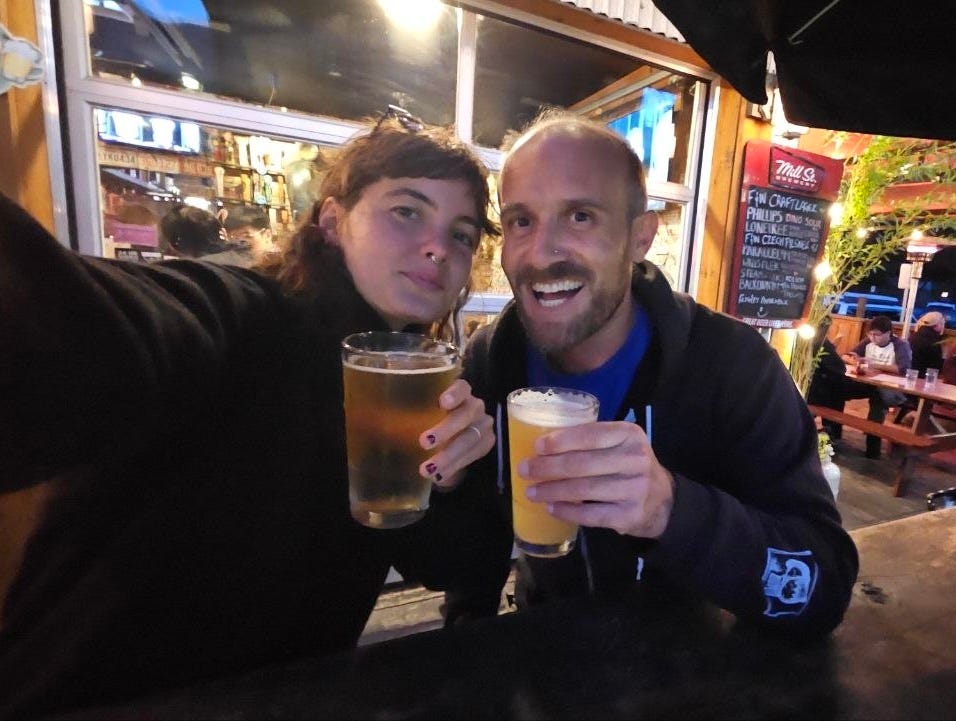
As a bonus, my French friend Anaïs was also in Squamish—thanks to connections she also made at the UK dance camp—and she’s a great partner for talking, dancing, teaching, and exploring. She even bought me a birthday beer.
And like that, it was over. Six months in North America, complete.
The rain came, and the rain left. I boarded a southbound Amtrak train from which I type these words. My bike hangs in the luggage carriage, sun pours through the windows, oceans and rivers and forests zip by, and soon I’ll arrive in Portland, where I’ll park my bike in my friend Vince’s garage for an unknown amount of time.
On Tuesday I’ll take a one-way flight to London with just a carry-on and personal item, bounce between the UK, Europe, and nearby countries for a while. Then I’ll apply for my next long-term residency permit: the Berlin freelancer visa, for which my writing background may help me qualify. If I succeed, I’ll be allowed to stay in Europe for three years.
To be clear, this is goodbye.
And also, with me, it’s never really goodbye.
If you know me, you know I move in circles. Or eccentric orbits. Right now, I don’t feel much of a gravitational pull from North America. Even the Shangri-La of Squamish feels suited for a different moment. Lots of people are happy to see me on this continent, but no one is telling me they need me here.
It’s wonderful to see my cherished North American friends, family, and landscapes. I’ll always return. But for the moment, I’m headed back to the Old World: a world that feels more like a “land of opportunity” for me, right now, than the New World.
From here, I can go anywhere I choose.
Always, always.
[Thank you to Julie for reading a draft of this post.]
I say bicycle touring is a “White Dude Freedom” because the vast majority of cyclists I pass—and essentially all of the ones who wave at me—are fellow white dudes. But for the record, there are plenty of long-term female cycle tourists, too.
Also for the record: Where are all the other cycle tourists these days? I simply didn’t see many of them during these six months. I posted on Reddit about this, and people have many opinions, which can be boiled down to:
The rising popularity of bikepacking/gravel biking over road touring
Poor road safety (larger vehicles + distracted drivers + poor infrastructure)
Americans are too busy working
Foreigners don’t want to visit the US right now
The ridiculously high cost of food
Most riders stick to the main routes (TransAm, Pacific Coast Highway, rails-to-trails, and ACA routes) rather than the weird (but gorgeous) bespoke routes I took
Assuming a 30-year fixed mortgage at 7% (😑) with 20% down, including property tax and homeowner’s insurance. (Estimate via Bankrate)
“The world’s indifference grants you freedom” is paraphrased from a wonderful audiobook I’m slowly devouring, python-style, about John Cage, Zen Buddhism, and the inner life of artists. Here’s another gem from that book:
Cage didn’t set out to impose his will on anyone, or anything. He certainly didn’t intend to create followers or acolytes. He chose to be himself, and to share his excitement and enthusiasm with those who were primed to hear him. Then all sorts of surprising things happened.
Thanks for the poem, Abi!
Beautiful as always! We'll miss you here in North America, but can't doubt the wisdom of your choice, and may come knocking in Europe!
Love this post. Interesting to read at the end, 'Lots of people are happy to see me on this continent, but no one is telling me they need me here.' — but what if no one needs you anywhere? And besides that, what if 'being needed' is the wrong metric altogether?
I've been mulling a post on regrets of the dying, which always come down to 'I wished I'd lived more for myself,' or 'I wish I'd done more of what I wanted, rather than what others expected of me.' Effectively, those on their deathbed are saying they wish they'd been more self-centered throughout life.