

No more test rides. No more tweaking the system. It’s time to go.
You hop on the bike, and you pedal south.
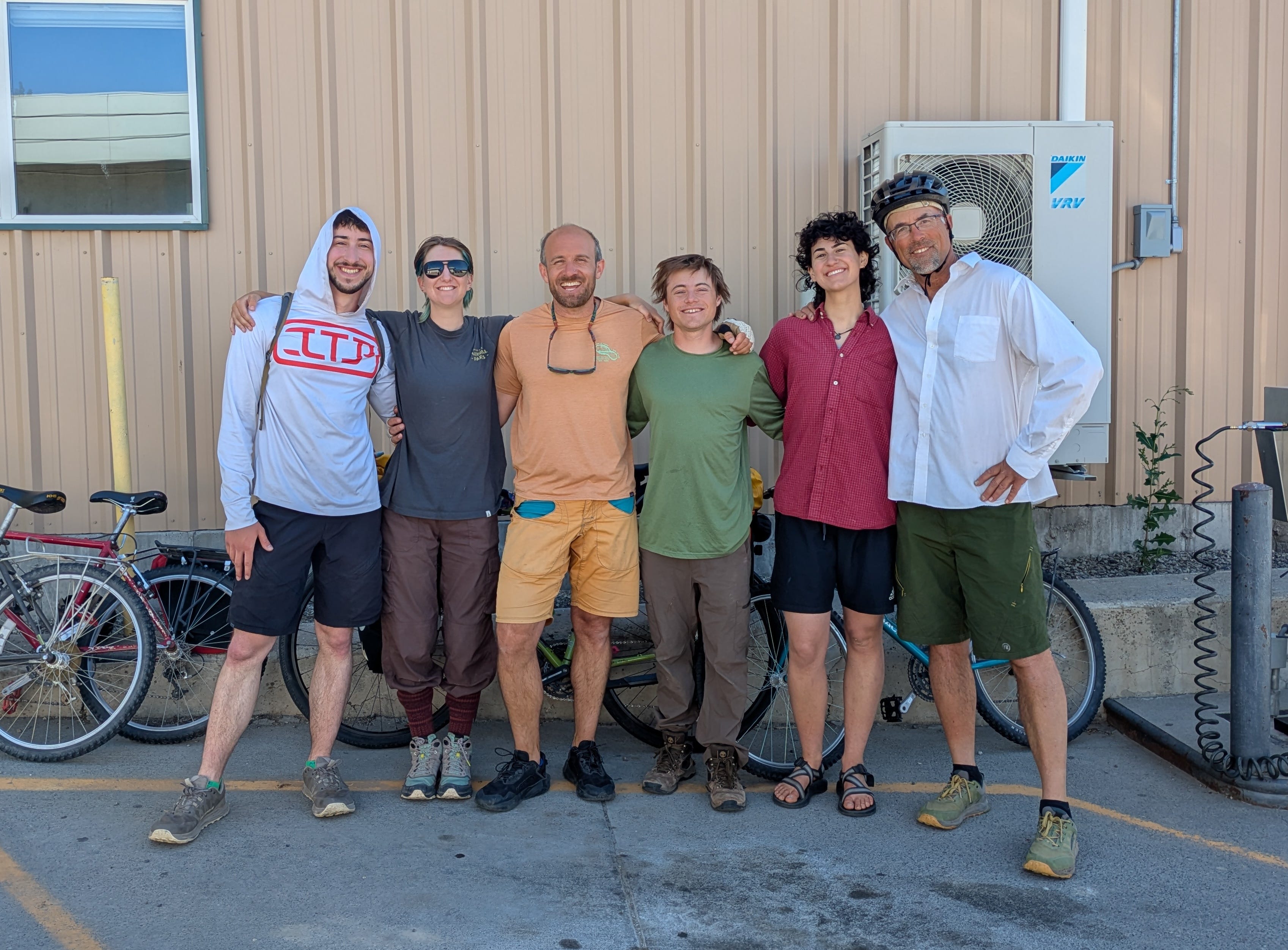
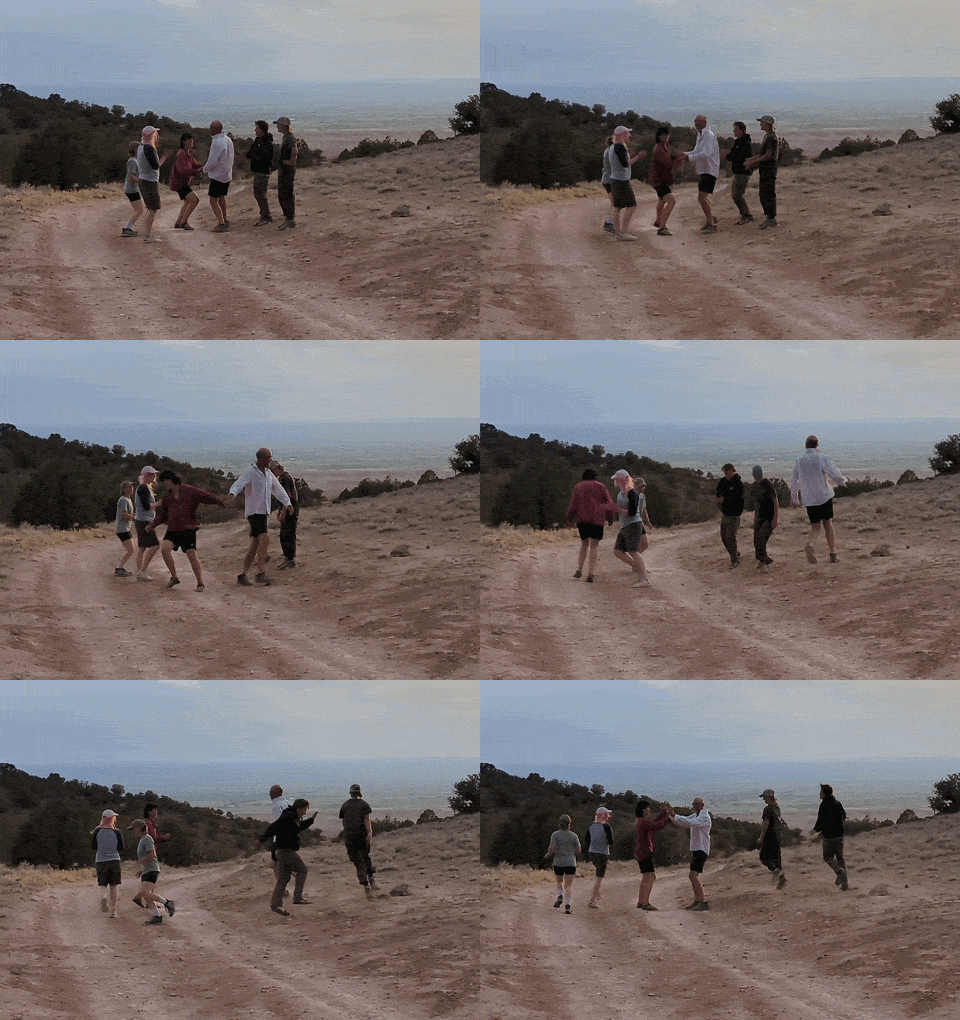
You’re joined by a gaggle of young adults and your old friend Dev. It’s nice to have a crew on day one—especially a crew that’s silly, joyful, and energized enough to do a little line dance at sunset.
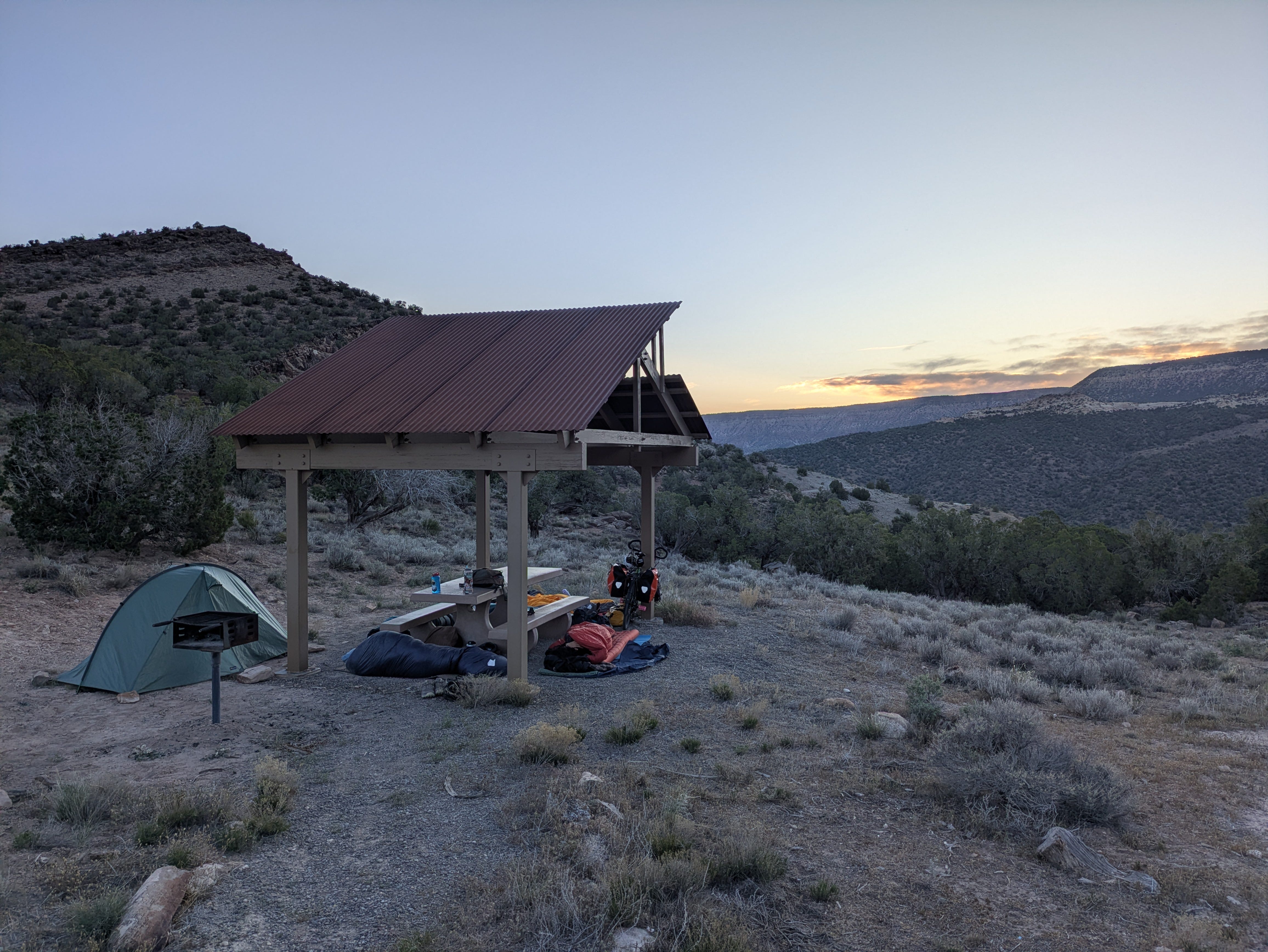
Rising early above the canyon rim, you witness young people sleeping in bags, in the dirt—dirtbags, pure and simple.
You hug Dev goodbye on a dusty, remote road. A perfect parting for a friendship founded in the Great West.
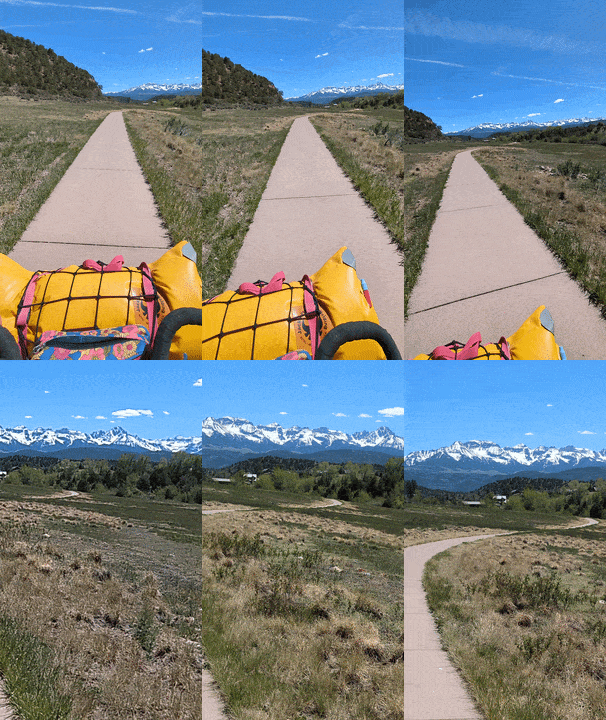
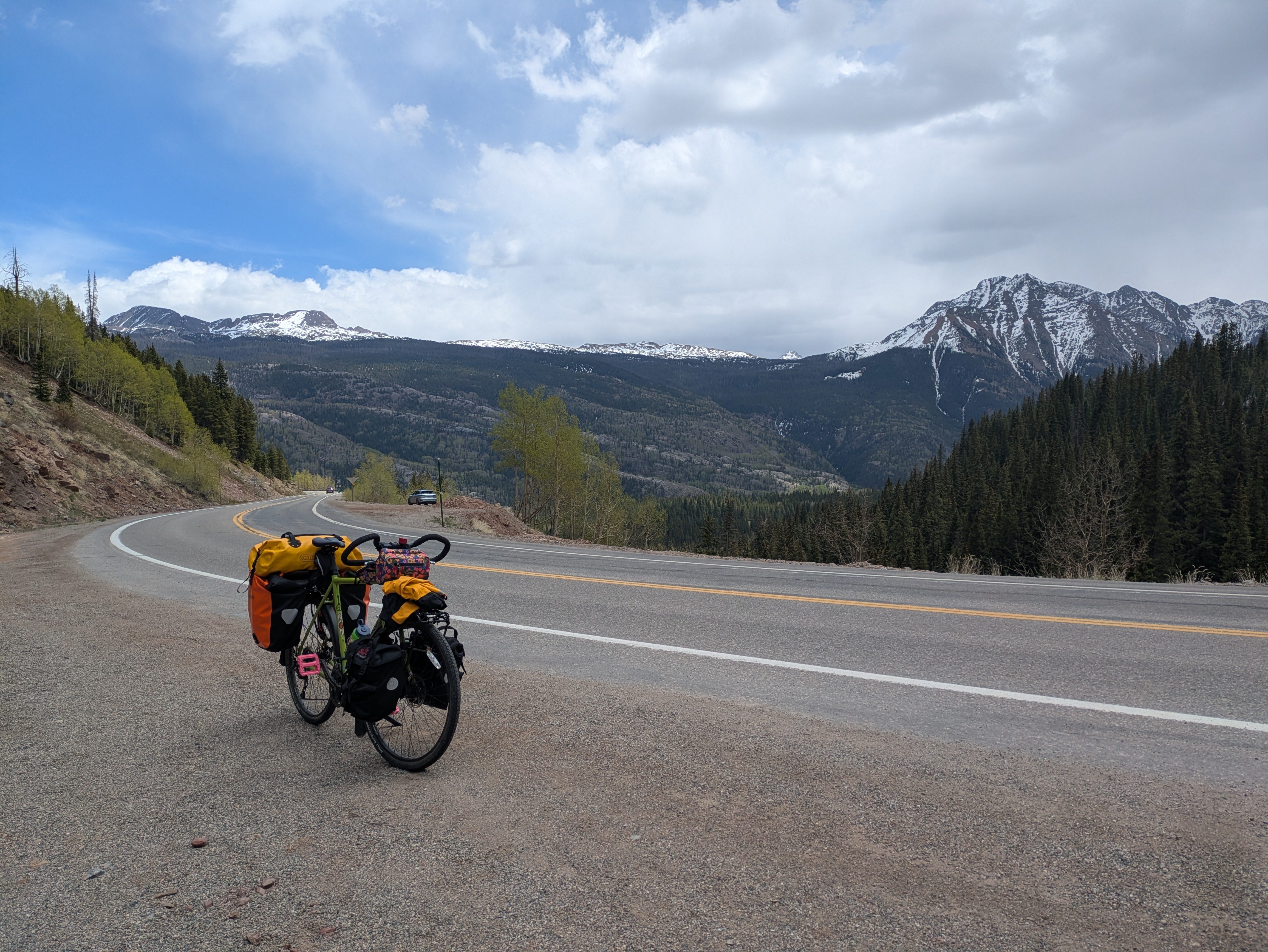
Cycling south, you grin, spying snow-capped mountains in the distance that grow larger with each passing hour. They remind you of other such ranges you’ve ogled from afar: the Sierra Nevada, the Himalaya, the Alps, and the Southern Alps of New Zealand.
Moving slowly from foothills to peaks is its own kind of therapy.
At a coffeeshop in Montrose, you make flirty eyes with a barista who’s recently back from New York City. “How many days are you around?” she asks. “Do you know about the nude hot springs?” she asks. As you leave, she turns from her customer to hold eye contact with you for a long beat. You smile, dream a little dream, and get back on the bike.
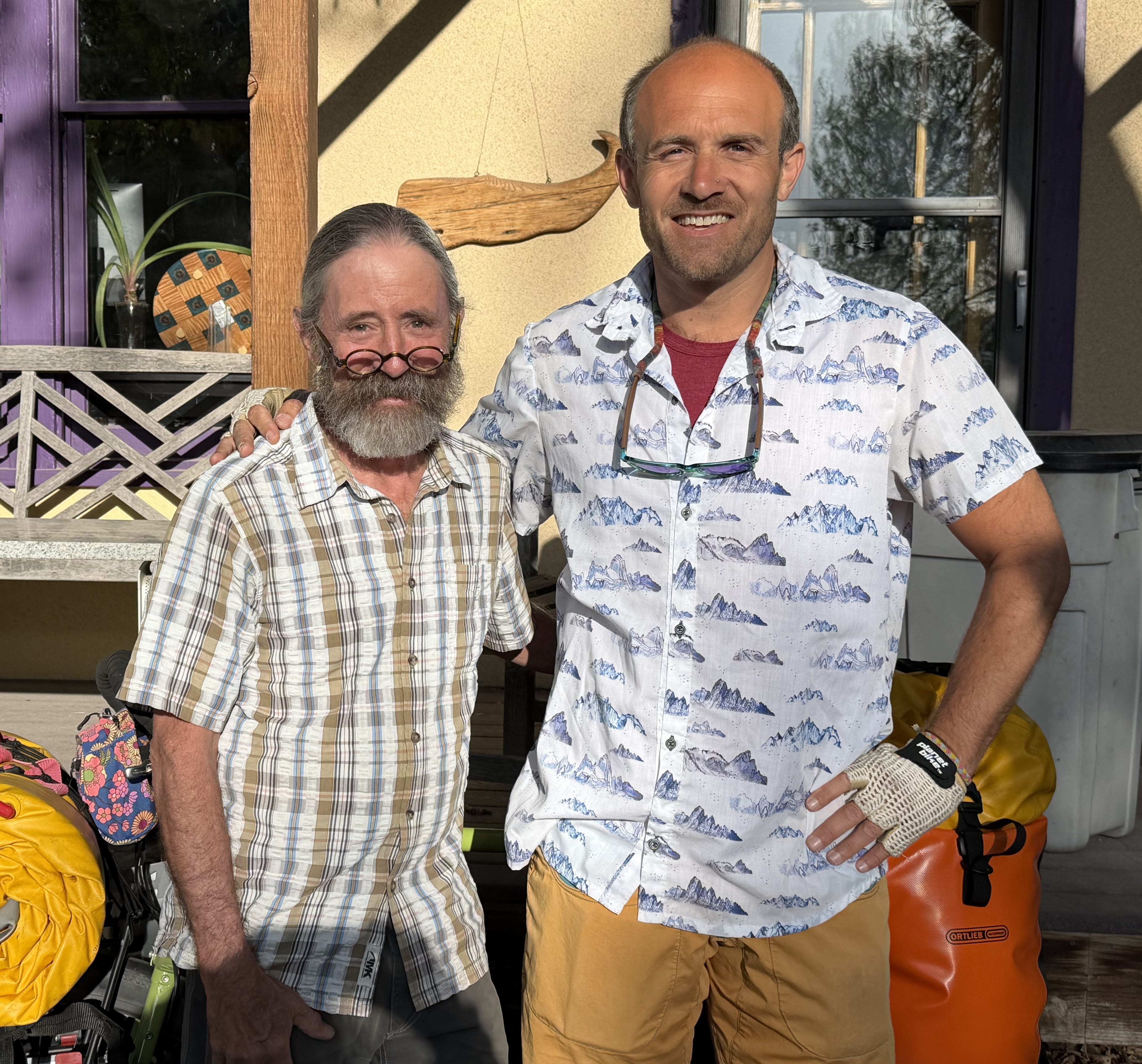
In the town of Ridgway, the mayor and his wife feed you burgers and salad, put you up in their private guestroom, and send you off with fried eggs and tamales. You are their first Warmshowers guest of the season.
Your lower back is feeling tense. Maybe powering up that last hill with the kiddos on Day One was a mistake. Maybe stabilizing the bike on bumpy roads with a ridiculously heavy sleeping pad strapped to the front torqued your lumbar. No matter how it happened, you feel the familiar signs of becoming hobbled.
A 10-mile ride to Ouray leaves you feeling worse. Your first big mountain pass is ahead, complete with a sketchy, zero-shoulder, sheer-drop approach. “Will I press on?” you ask yourself. “What kind of trip is this, and what kind of person am I?”
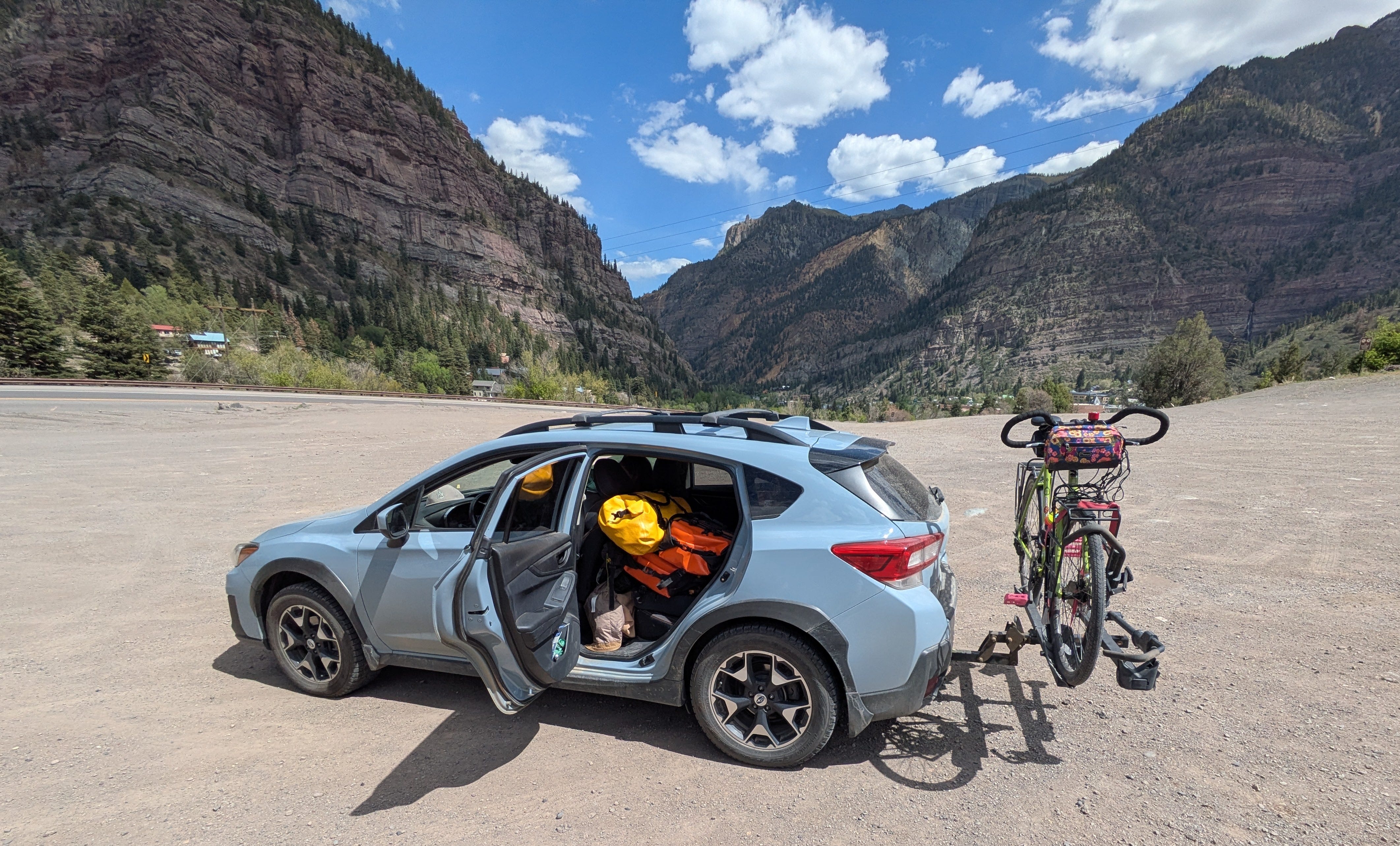
You stick your thumb out, and within a few minutes, a nice couple in a Subaru with a bicycle rack pick you up.
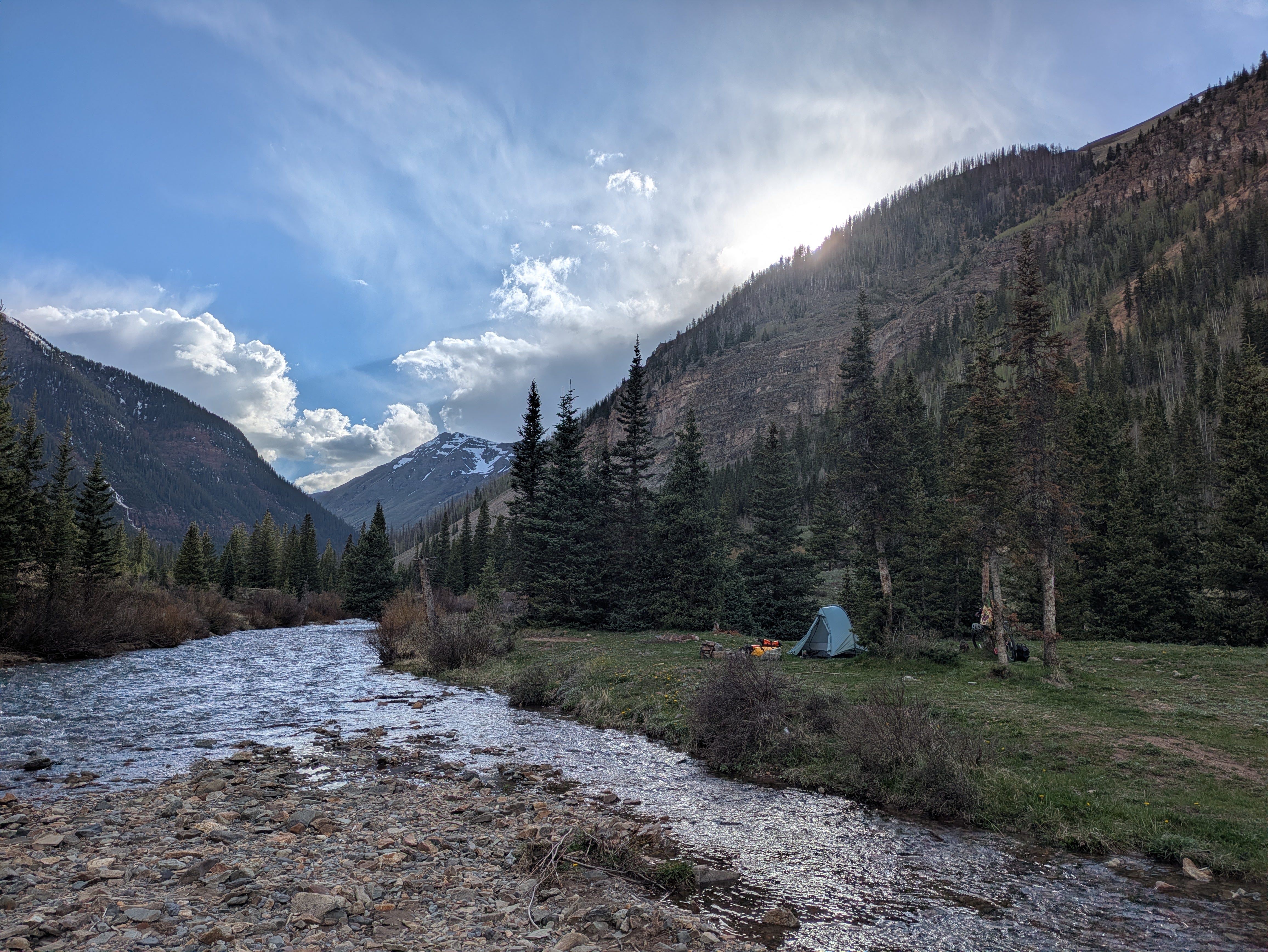
Arriving at your camp spot far ahead of schedule, you enjoy a long, leisurely afternoon in a high mountain valley outside Silverton. This is why you’re here, you remind yourself. You’re happy you chose red truck vibes over red line vibes.1
Still, you’re disheartened by your body. You hobble around, stretch, and dream of selling your brand-new touring rig in San Francisco. A moose grazes in a nearby meadow, entirely unconcerned with your drama.
You give your next book talk at a little deli in Silverton, and you abandon your ultra-heavy sleeping pad at your friend’s place. He will give it a better home.
Sleeping in the deli owners’ basement, you wake feeling cautiously optimistic about riding the next long stretch of mountain passes.
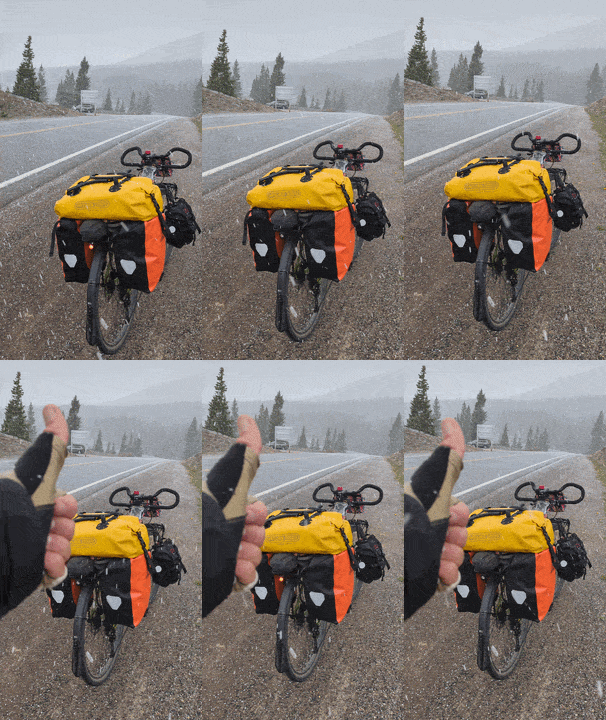
You smile as you pass the highway sign indicating 10,000’ elevation. You smile when it starts snowing. This is the real deal. This is what you’re here for.
On the other side of the passes, battling a headwind toward Durango, you stop for lunch and pay $28 for salad and fries. Later, at a place recommended for its affordability, you will pay $18 for a burrito bowl and chips. When did food in this country become so expensive? You reacquaint yourself with peanut butter and bagels.
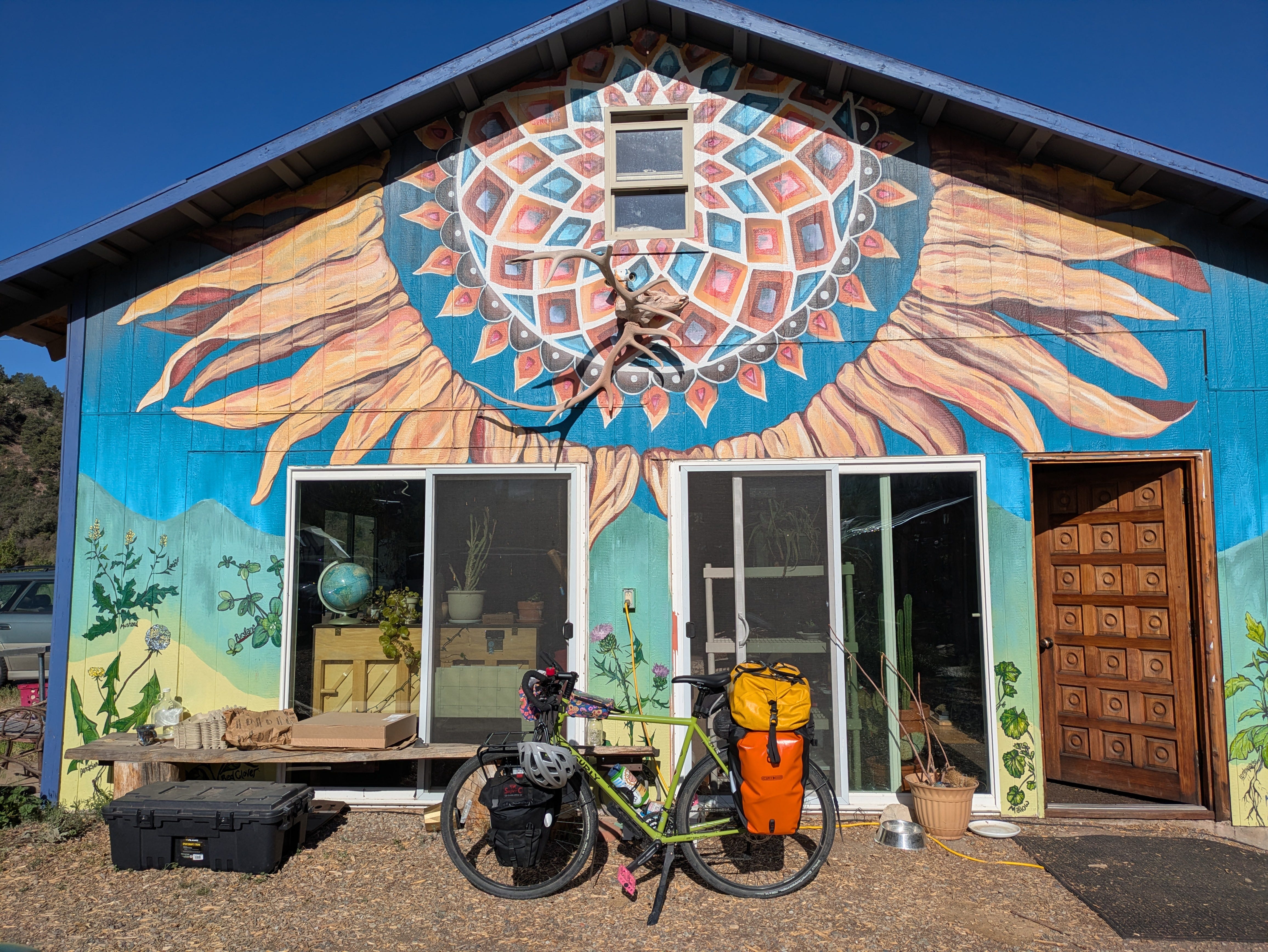
In a picturesque valley outside of Durango, you stay with a friend of a friend. Actually, you stay in the little countercultural agricultural community that she’s built. (“We’re not organized enough to be a cult,” a community member informs you.)
Your home is the top of the “sun center,” atop a scattering of mattresses. Different people come and go, all day long. One tells you about a Zouk social dance happening that afternoon. You weren’t expecting to dance on this trip, and you don’t really know how to dance Zouk, but you go anyway. They are delighted to have you.
Dance is a smile-generation machine.
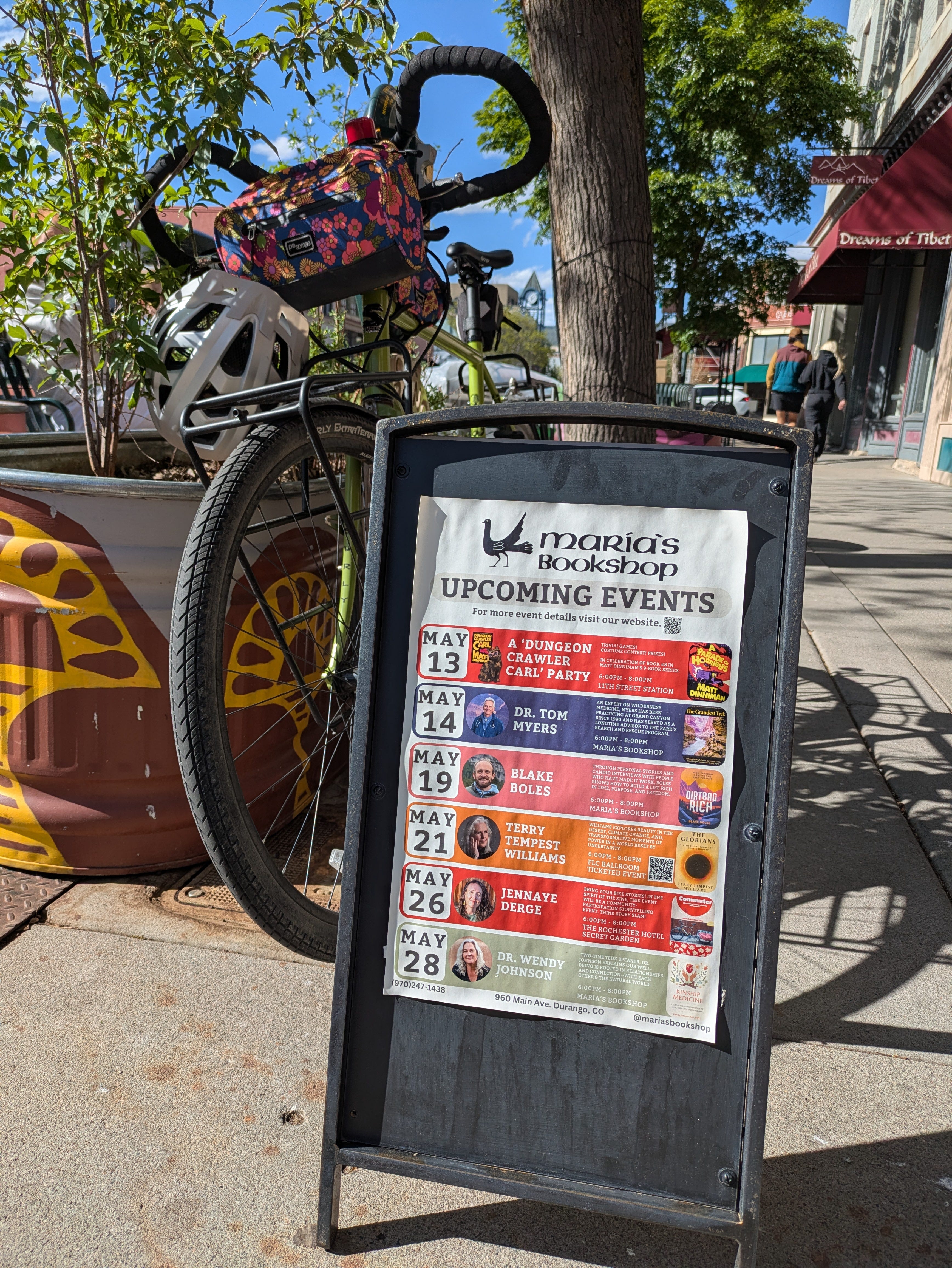
In Durango you speak at a popular local bookstore. Even with a promotional interview on the local radio, turnout is modest. It’s always modest. But you enjoy taking speaking for “the public,” and your message becomes a bit clearer each time.
Sitting next to the river in Durango, you turn around and realize that a teenager is going through your bicycle bags. You confront him, see that he’s either drunk or high, and shoo him away. Later you notice that one of your bicycling gloves is missing. You need these gloves! So you buy a new pair and decide to sport one old one (beige) and one new one (green). Thank you, Altered Teenager, for this hot new fashion.
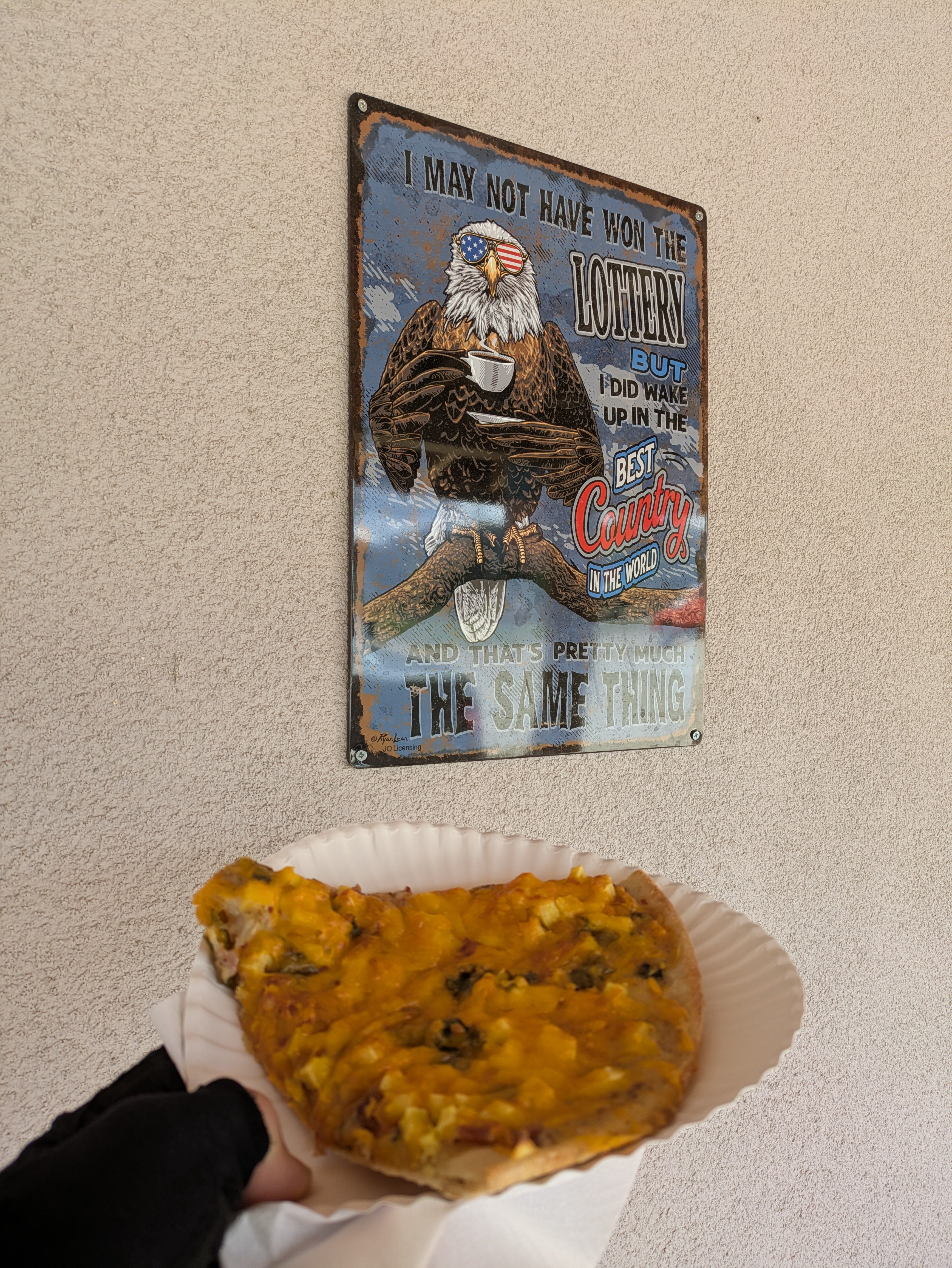
Riding west out of town, you stop at a gas station for “breakfast pizza” (the sauce is gravy), munching it below a sign declaring “I may not have won the lottery but I did wake up in the best country in the world, and that’s pretty much the same thing.”
Zooming downhill toward the town of Mancos, you navigate perilous detritus in the shoulder, patches of broken pavement, and sneaky gravel piles. Pickup trucks with massive wheels scream like TIE fighters when they pass you at 70mph. (Does this make you an X-wing?) Passing big rigs give you plenty of space, until they can’t—because someone else is passing them.
It’s all too much, right until the noise and chaos disappears, and you’re suddenly pushing pedals along fine, clean pavement in a quiet, pastoral countryside. Crickets are chirping, and the sun is shining. The battle is over.
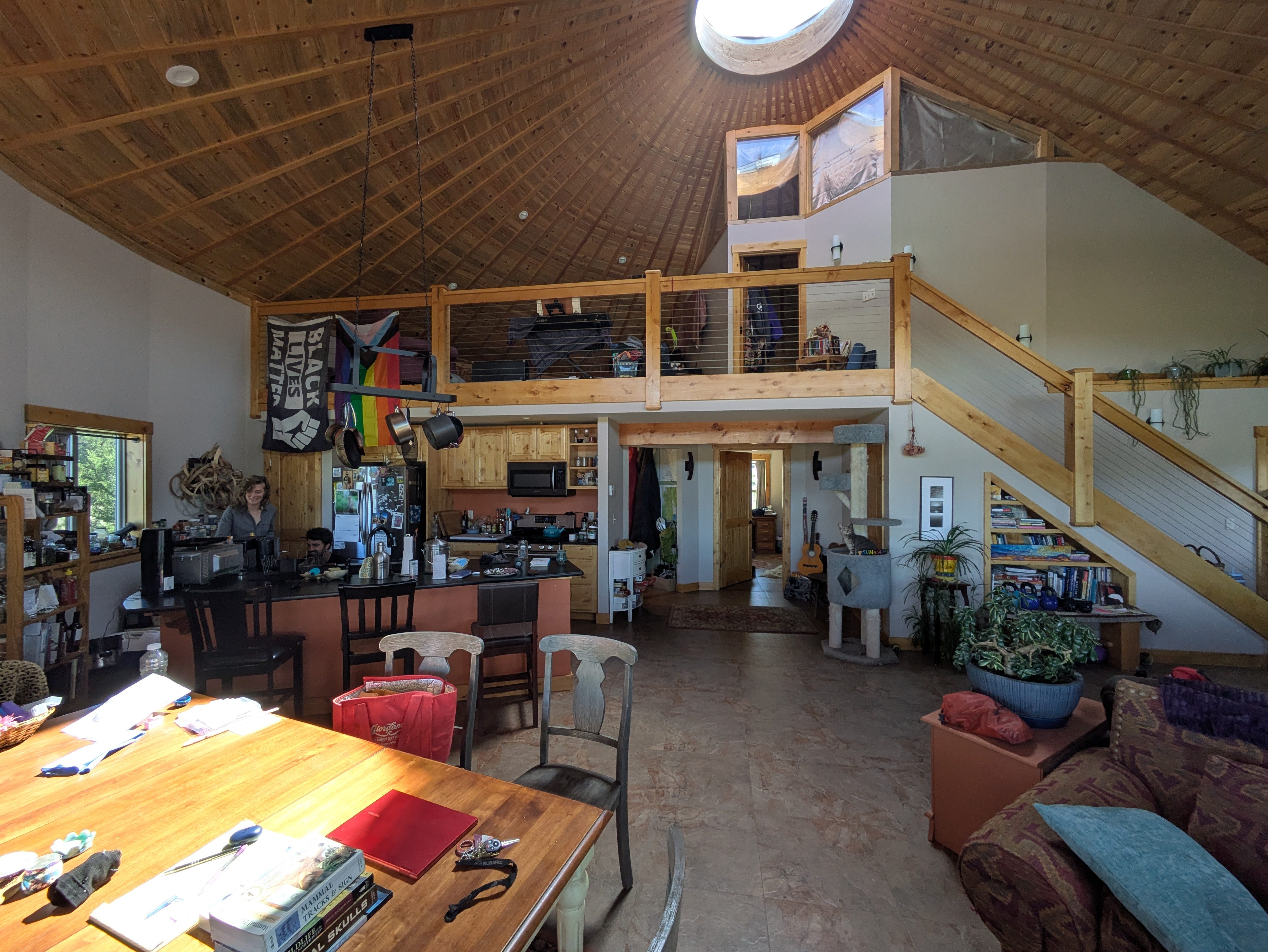
You stay with your friend JJ, whom you met dancing tango in Patagonia, in her “yurt palace.” While she stains her walls in the late afternoon sun, you cook a feast for her and her housemate, a tender-hearted high school guidance counselor. You try to convince JJ to come dance at your fusion weekend in Germany; she tries to convince you to join her fusion weekend in Durango. For now, it’s a draw.
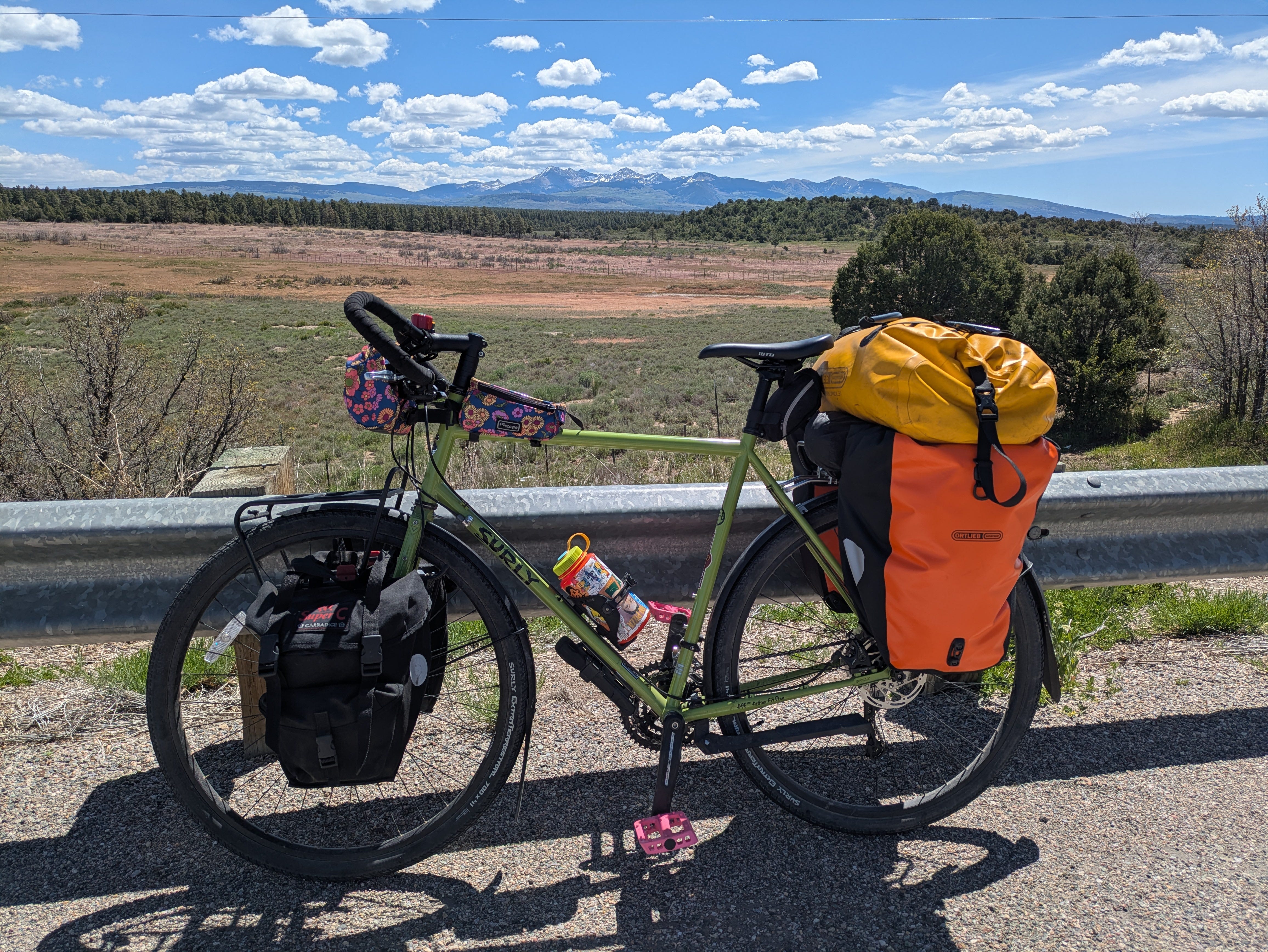
Pushing further west the next morning, you take a final glimpse at the high mountains of Colorado—the San Juans—and feel the land transitioning into the flatter, drier, high desert of Utah and the Great Basin.
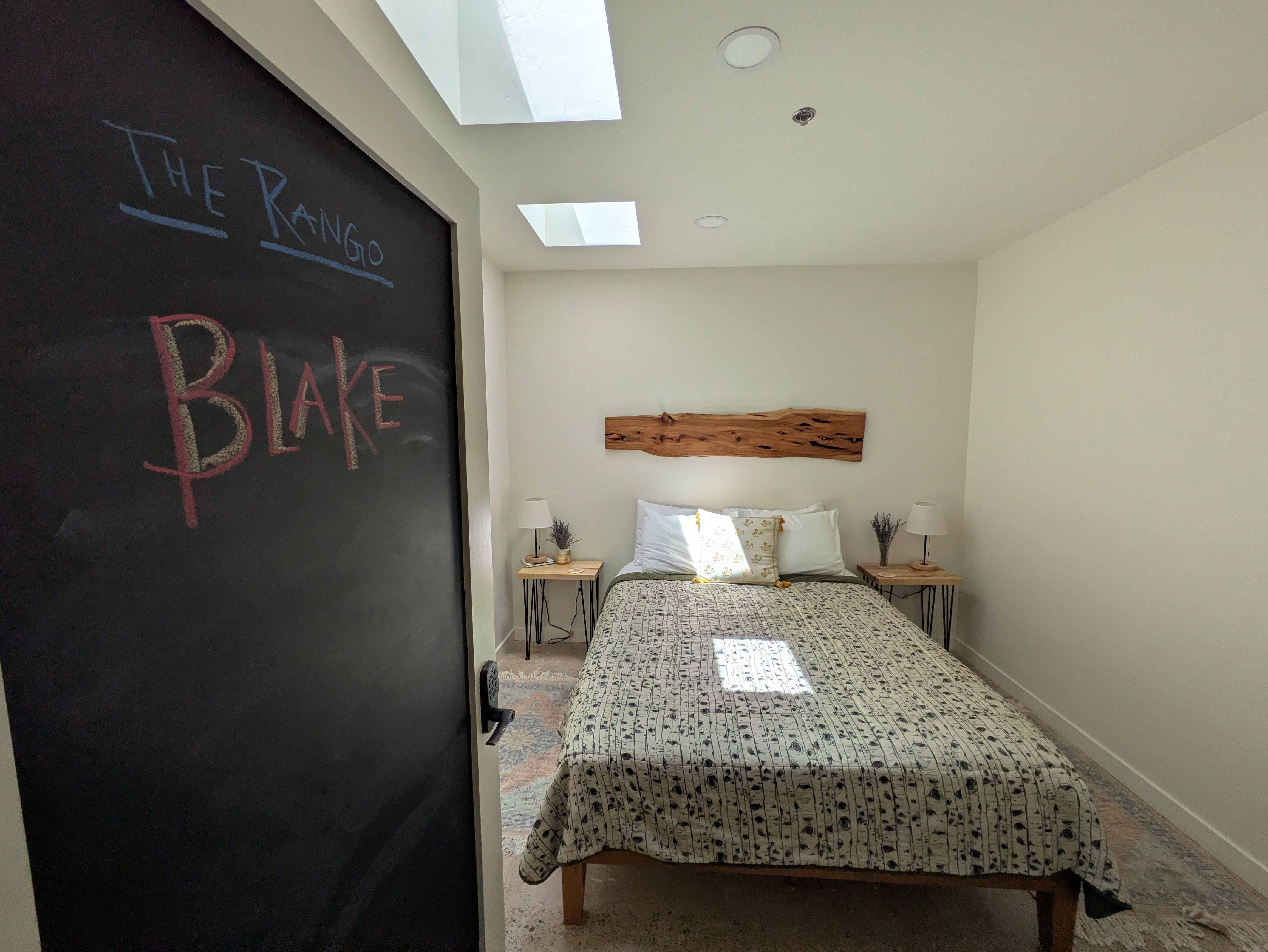
In the postcard-sized town of Dolores, you give one more talk at the public library. It’s well attended by enthusiastic older locals. You’re invited to stay for free at the clean and charming Dolores Bike Hostel, which you realize might make an excellent location for an Unschool Adventures teen program.
It has been eight days, and you have traversed a healthy chunk of Western Colorado. Your body has failed you, and your body has been redeemed. You’ve danced, cooked, camped, and schemed. You’ve been the recipient of great generosity. You’ve survived perilous downhills, expensive meals, snow, a moose, “the public,” and an altered teenager.
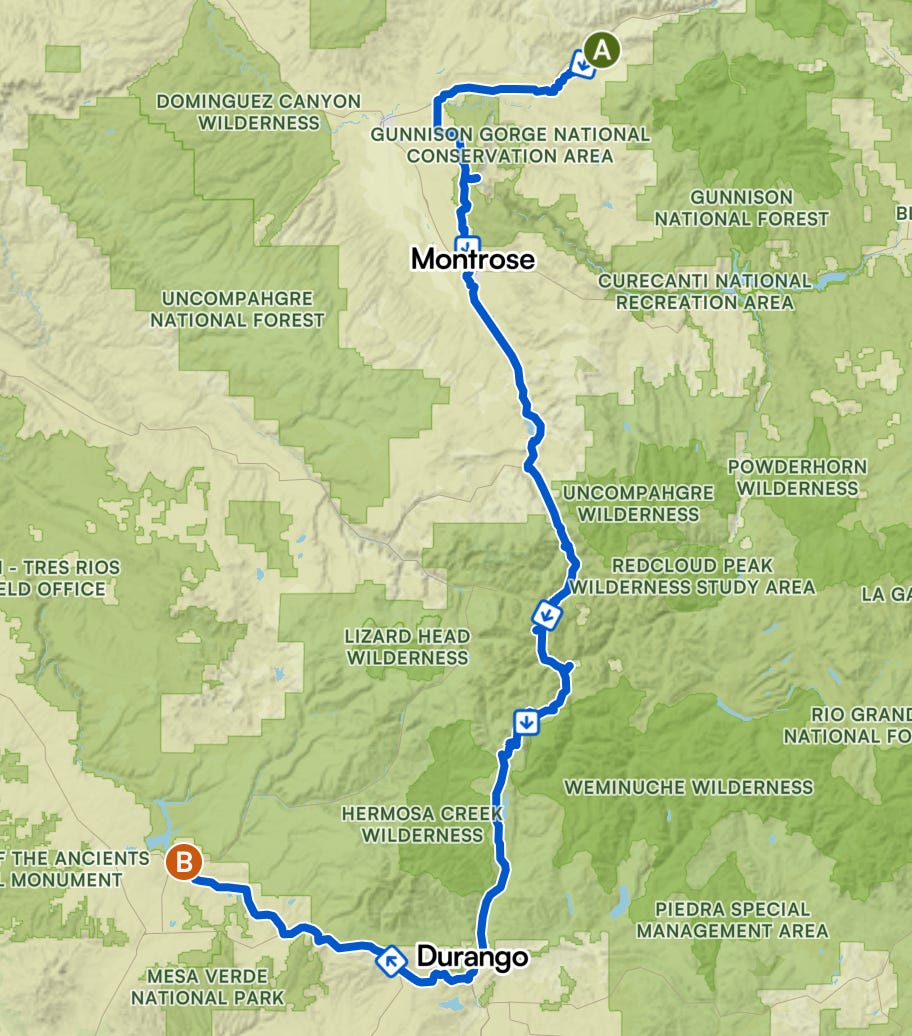
Now the adventure continues in Utah—just four hitch-hikes away—along one of your favorite highways in the whole world. There’s more nature, more mountains, and more miles to come. And a good friend waiting at the end of the line. 🌞
“Red truck” is a reference to the mythological vehicles that would always pick you up when hitchhiking with a bike in Patagonia.
“Red line” refers to the algorithmic, highest-efficiency route across a landscape: a route that can lead you to forget why you take adventures in the first place.
One pedal stroke at a time, well done Blake and thanks for sharing
Loved reading this… felt like I was in a seat beside you.
My biggest takeaway from this was Be Like the Moose! I am going to try to move forward each day and think of being like the moose and not concern myself with someone else’s drama (social concern is different - other people’s drama however I can certainly do with less of). Great insight as always!