

I’m enamored by a dead Japanese man called Nanao Sakaki.
Witnessing the mushroom cloud over Nagasaki as a 22-year-old military conscript, Nanao was deeply affected by World War II. He tried working in factories but soon dropped out of Japanese society to become a poet, naturalist, and long-distance walker. He founded a hippie commune, fought for nature conservation, and ultimately met Gary Snyder and Allen Ginsberg, who inducted him into American beat culture.
With few possessions and little money, Nanao traveled the world “on the power of charisma” for much of his 40s, 50s, 60s, and 70s: visiting his friends, reading and writing, walking long distances, brewing green tea, and spending deep time in nature in the American Southwest.
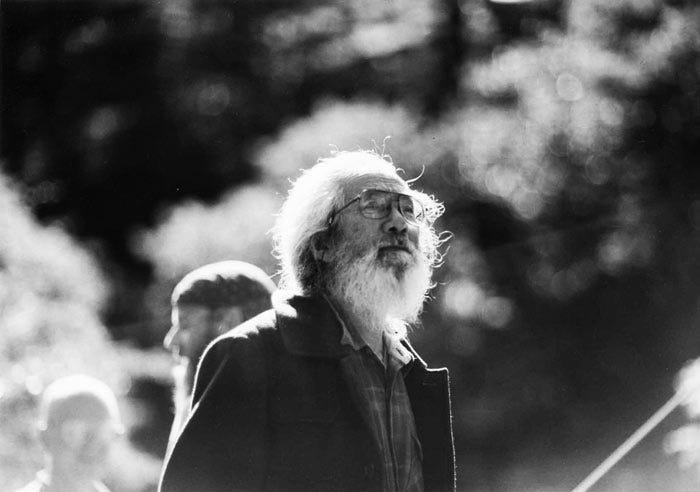
I love Nanao’s story as an example of how one might travel for a very long time—if you meet the right people, keep your needs few, and make yourself a very welcome guest. As Nanao’s long-time friend John Brandi recalls:
Whenever he knocked, the door opened and time stopped. I was thrust into a loop of beauty brought alive by his smoke-flavored presence, his eagerness to cook, feast, drink, laugh, tell stories, catch grasshoppers, quietly write, make long-distance calls, go for berries and mushrooms, listen to Sudanese singers, Jamaican reggae, the San Juan Turtle dance, guitars from Zaire, Aboriginal didjeridoo, or the deep-down drone of Tibetan chant. He loved a good joke, appreciated down-to-earth talk, hated sentimentality, shunned awards, thought religious robes smelled of money, disliked sycophants and was invigorated by challenge.1
I’ve read everything I can about Nanao, and certain facts are hard to find. Was he truly someone who rejected money, or did he have outside funding? He fathered children with three different women—one of whom wrote kindly about him in a posthumous anthology—but was he meaningfully present for the others?
Nanao died at 86, when according to Gary Snyder, he was “living with friends in the mountains of Nagano prefecture in a little cabin. He had stepped out the door in the middle of the night to stargaze or pee and apparently had a severe heart attack. His friends found him on the ground the next morning.”
This doesn’t sound like the worst way to go, yet still I wonder—what were his final years like? Did his friendships and connections provide a genuine security net?
Regardless of my unresolved questions, one thing is clear: Nanao wrote some poems that absolutely spoke to me. Here’s one:
Happy Lucky Idiot

If you have time to chatter
Read books

If you have time to read
Walk into mountain, desert and ocean

If you have time to walk
Sing songs and dance

If you have time to dance
Sit quietly, you Happy Lucky Idiot
And another:
Break The Mirror

In the morning
After taking cold shower
—–what a mistake—–
I look at the mirror.

There, a funny guy,
Grey hair, white beard, wrinkled skin,
—–what a pity—–
Poor, dirty, old man!
He is not me, absolutely not.

Land and life
Fishing in the ocean
Sleeping in the desert with stars
Building a shelter in the mountains
Farming the ancient way
Singing with coyotes
Singing against nuclear war–
I’ll never be tired of life.
Now I’m seventeen years old,
Very charming young man.

I sit down quietly in lotus position,
Meditating, meditating for nothing.
Suddenly a voice comes to me:
“To stay young,
To save the world,
Break the mirror.”
To stay young, to save the world, break the mirror—those are words I’ll be chewing on for a very long time.
How can I, and you, maintain a 17-year-old spirit? How might we avoid obsessing over earning, saving, and retirement? How might we focus on art, advocacy, adventure, and friendship—and trust that everything will work out?
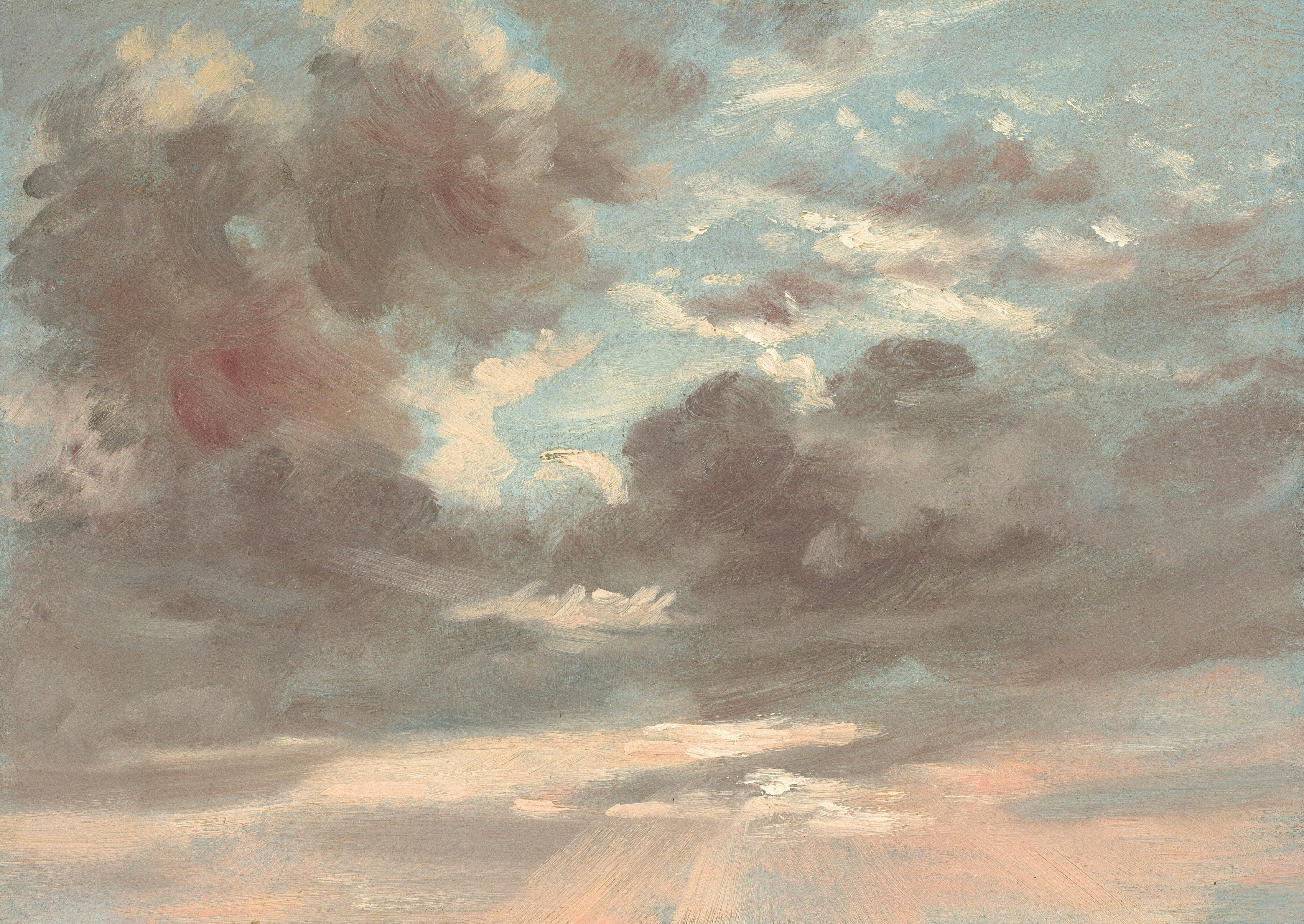
Nanao brings to mind a Daoist concept I recently stumbled upon: cloud wandering.
The term comes from a 12th-century Chinese text offering practical advice for traveling Daoist monks, distinguishing between two types of “wandering”:
The first involves viewing the brilliant scenery of mountains and rivers, the splendid colors of flowers and trees. Some people engaging in this kind of wandering delight in the variety and splendor of provinces or prefectures. Others enjoy the towers and pavilions of temples and monasteries. Some seek out friends to forget their concerns. Others indulge the heart-mind with fine clothing and food. People like this, even if they travel roads measuring ten thousand miles, exhaust their bodies and squander their strength.2
This kind of wandering is empty and unsustainable, the author argues, as compared to the “true practice” of cloud wandering:
Cloud wandering is to pursue inner nature and destiny and search for mystery and wonder. One who wanders like this climbs high mountains with dangerous passes to visit enlightened teachers without tiring. He crosses distant streams with turbulent waters to inquire about Dao without slackening. Then, even a single saying received in the right spirit may open up complete understanding.3
Much like the old distinction between tourism and traveling, empty wandering is about pleasure-seeking, box-checking, and idle socializing, while cloud wandering is laden with spiritual intent, challenge, learning, and personal transformation.4
Cloud wandering makes all this possible, a modern Daoist scholar writes, because:
Nobody can ever know what landscapes, what natural features, what people, or what gods one may encounter on the road. Whether an adventure without preset destination or a trip with a precise goal, the monastic form of traveling is an open-ended hike, an aimless wandering, a journey of discovery—looking both for masters and for oneself.5
To me, Nanao was clearly a cloud wanderer of the 20th-century, whose “masters” included plants, animals, mountains, deserts, tea, books, poems, long walks, and individuals he encountered on his journeys.
My own 21st-century wandering has involved a similar but different set of teachers: summer camps, student cooperatives, the High Sierra, tango and fusion dancers, books and articles and podcasts, former educators who dropped out of the system, and long hikes, runs, and bike rides.
12th-century China was a very different time and place. How cloud wandering translates into the modern context of a globalized, godless, and capitalistic world is open for interpretation. I’m sure it involves breaking at least a few mirrors.
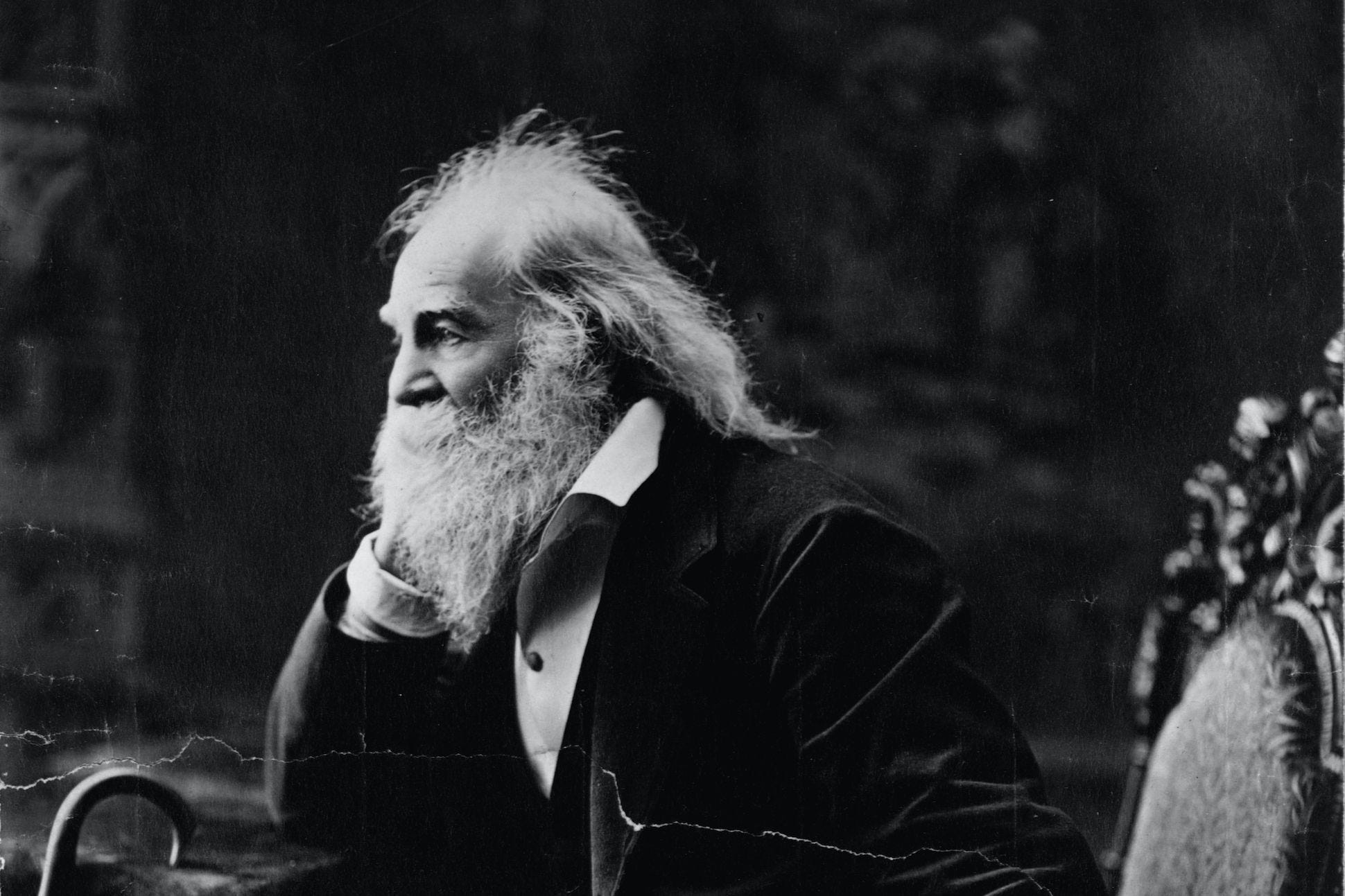
A final reason I admire Nanao Sakaki is that he embodies a certain American restlessness: a compulsive need for forward motion that feels baked into my bones.
Jack Kerouac famously captured this spirit with On the Road and The Dharma Bums.6 But did you know that he, in turn, was influenced by Walt Whitman’s Song of the Open Road, a full century earlier?
I didn’t really grasp the Kerouac-Whitman connection until I found D.H. Lawrence’s essay on Whitman, one showing how we Americans might possess our own version of cloud wandering:
D.H. Lawrence on Walt Whitman

The Open Road. The great home of the Soul is the open road. Not heaven, not paradise. Not 'above'. Not even 'within'. The soul is neither 'above' nor 'within'. It is a wayfarer down the open road.

Not by meditating. Not by fasting. Not by exploring heaven after heaven, inwardly, in the manner of the great mystics. Not by exaltation. Not by ecstasy. Not by any of these ways does the soul come into her own.

Only by taking the open road.

Not through charity. Not through sacrifice. Not even through love. Not through good works. Not through these does the soul accomplish herself.

Only through the journey down the open road.

The journey itself, down the open road. Exposed to full contact. On two slow feet. Meeting whatever comes down the open road. In company with those that drift in the same measure along the same way. Towards no goal. Always the open road. . . .

It is the American heroic message. The soul is not to pile up defences round herself. She is not to withdraw and seek her heavens inwardly, in mystical ecstasies. She is not to cry to some God beyond, for salvation. She is to go down the open road, as the road opens, into the unknown, keeping company with those whose soul draws them near to her, accomplishing nothing save the journey, and the works incident to the journey, in the long life-travel into the unknown. . . .

This is Whitman's essential message. The heroic message of the American future. It is the inspiration of thousands of Americans today, the best souls of today, men and women.
Despite the strangeness of reading a “heroic message of the American future” these days, these 100-year-old words absolutely speak to me—especially the questioning of traditional mysticism, relentless forward motion, and explicit sociality.
These are the Americans who I hold close, and who I believe myself to be: the ones who aren’t good at sitting still or self-effacing. The ones who do not retreat into remote monasteries, or salvation-promising gods, or high-walled mansions, or do-good self-sacrifice. The ones whose endless journey on two slow feet brings them closer to fellow travelers whose soul draws them near, accomplishing nothing but the journey itself.
Are we talking about bums? Are we talking about saints? Does it matter?
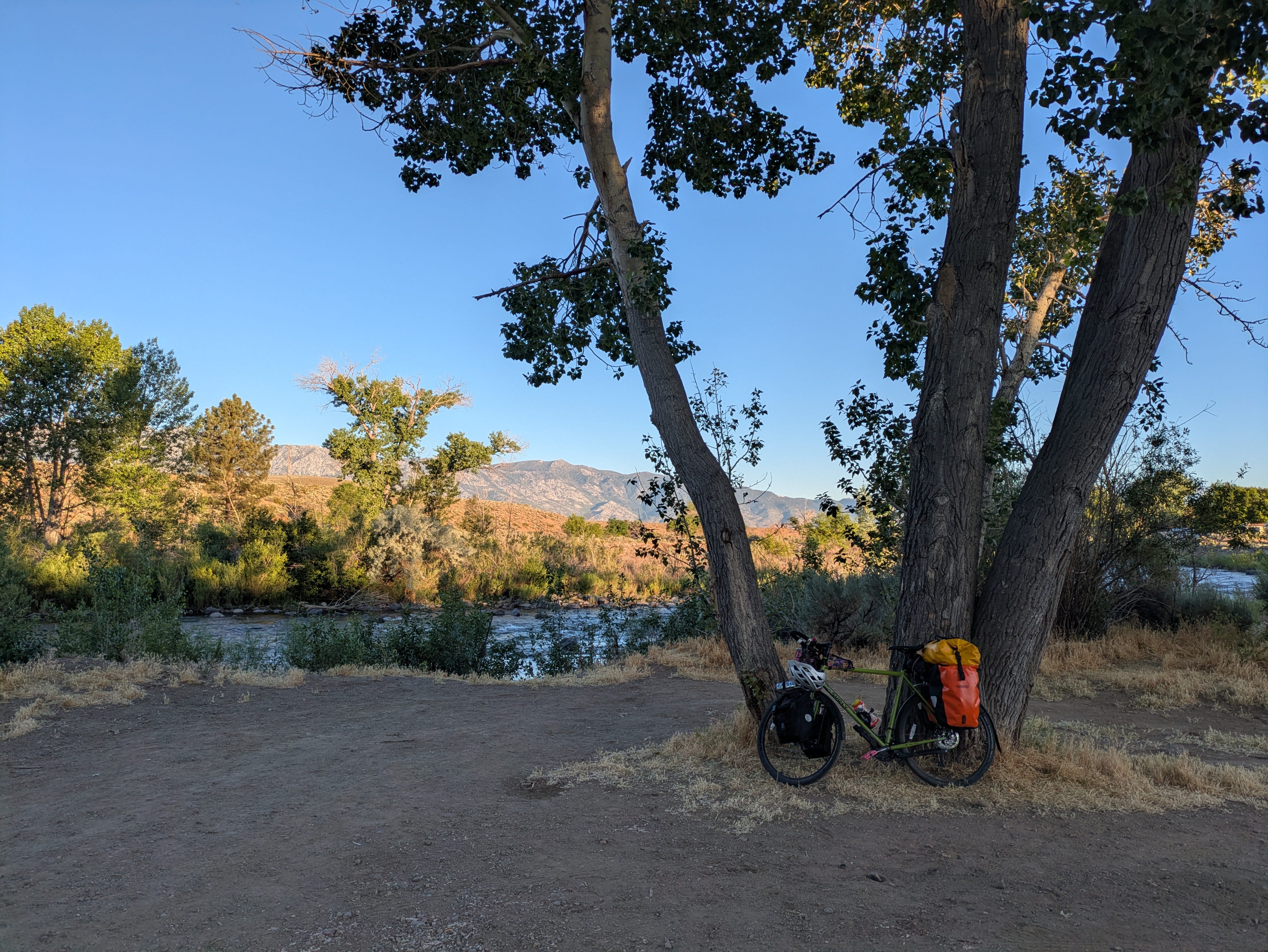
Nanao Sakaki came to America in the 1970s to wander between friends and seek new teachers. Dirtbags do something similar today: climbing high mountains with dangerous passes and crossing distant streams with turbulent waters (metaphorical or not) to find the lessons the world below cannot easily provide. Along the way we encounter other souls drifting in the same measure. They become our purpose. Is this not enough for a life?
From “Redoubled Yang’s Fifteen Discourses to Establish the Teachings by Wang Zhe, Master Chongyang” in The Way of Complete Perfection: A Quanzhen Daoist Anthology by Louis Komjathy.
From “Seeker’s Progress: Mystical Temporalities in Daoist Cultivation” in Time and Temporality in the Chinese Religious Traditions, edited by Livia Kohn.
I suspect Rolf Potts would agree.
Adeline Herrou, cited in “Seeker’s Progress.”
Hoho, a master stroke Blake! I can feel the mointain wind on my face while sitting on the beach and thinking if this is safe to forward to my kids! What if they turn up just like you!?
Great one Blake. I wasn’t aware of Nanao or cloud wandering so thanks for both. Hope you’re enjoying the ride. 🤙