

I recently attended a silent retreat in England. Alongside 50 others, I rose at 6:30am, sat in meditation, walked in meditation, and did little else until 9:20pm, for eight full days.
Life at a meditation retreat is simple. Sit and be present. Walk and be present. Feel what’s happening in your body. Observe the fleeting nature of your thoughts, desires, anxieties, and annoyances. Absorb a few lectures on meditation technique and eastern philosophy. Do some chores. Get lost, notice when you’re lost, and begin again.1
The last retreat I attempted, a 10-day Vipassana, was so difficult and frustrating that I left after 5 days. But my desire to complete a longer retreat remained. The center I found in England had similar rules to the previous one—no phones, no reading, no writing, and no speaking beyond brief exchanges with teachers, site staff, or taskmates—but seemed less dogmatic, less pain-inducing, and more humane. It all proved true.
I still got my panties in a bunch when the teachers spewed too much New-Age-Buddhist-gobbledygook in their lectures, but I grinned and bore it. Because where else can you find a container so exquisitely designed to calm your mind, reset your attention, allow what’s important to rise, and let the rest fall away?
Meditation retreats are like intense dreams, drug trips, exercise-induced visions, and over-caffeinated sessions with sycophantic chatbots: most people don’t care about your dreams, unless your dreams are about them.
Furthermore, many “profound insights” that we receive during such experiences often reveal themselves, with time and sober reflection, to be strange, empty, or downright delusional.
That disclaimer aside, I have been chewing on one particular insight from this retreat long enough to feel it’s durable, meaningful, and worthy of sharing. Here it goes:
I climbed many mountains to be here.
Allow me to elaborate.
Changing the foundation of your identity, it turns out, is a tricky thing.
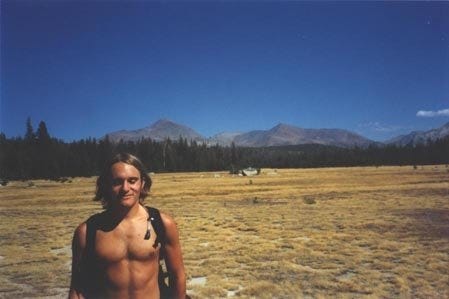
Throughout my twenties and early thirties, I felt strongly that I must live near the mountains and make regular pilgrimages into the high country—especially the California Sierra Nevada. Any job, relationship, or obligation that threatened this capacity was just that: a threat to be mitigated. So I crafted a life that let me hike, wander, run, and backpack through the high and beautiful places of the world, whether with friends or on my own, over and over again.
Then I began flirting more seriously with tango in Argentina, and eventually, fell hard in love with fusion dance in Europe, and my center of gravity began shifting away from wilderness. For the first time, I began to understand why concrete jungles exist—why they are not mere blights on the face of this green planet.
The six-month cycle tour of North America earlier this year brought me back to some of my most cherished mountain ranges, and to these places I brought a question: Shall I continue building a new life in urban Europe, or shall I reestablish myself in the wild lands of the Far West?2
The answer came swiftly. While mountains and nature mean so much to me, the promise of human connection offered by partner dance—the depth of feeling, relationship, and creative expression it enables—far outweighs the rewards of even the deepest immersion in nature. Halfway through the cycle tour, Europe had already won.
But the thinking brain and the feeling body have different ways of knowing, grasping, and accepting. And sometimes it takes a somatic sledgehammer—like a meditation retreat—for a new identity to take hold.

Halfway through the retreat, near the end of a 45-minute sitting session, I witnessed my brain do something fascinating.
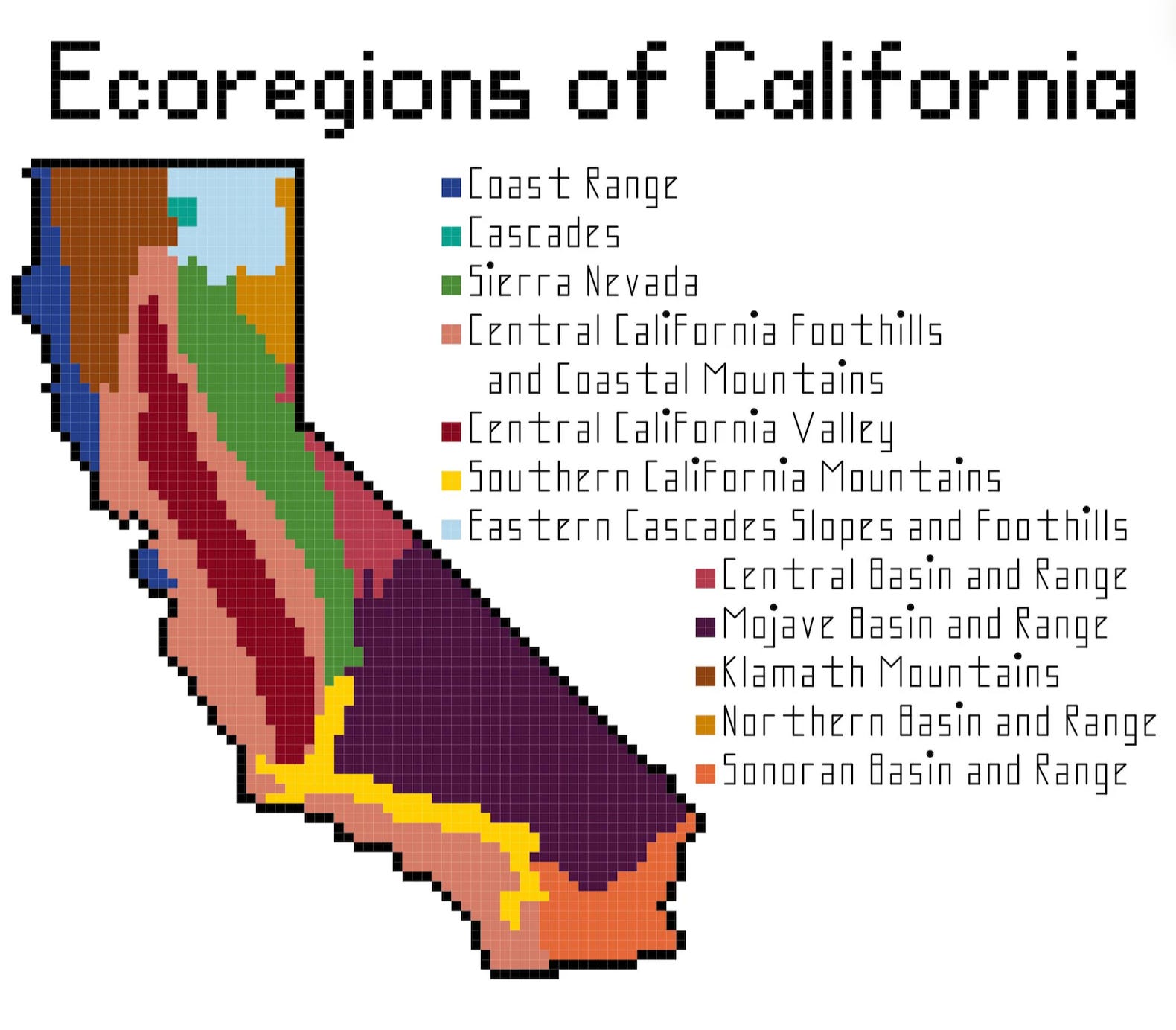
It began with a vision of the Owens Valley and Eastern Sierra Nevada: a region I know, love, and associate with security.
Then—bam!—my brain jumped to the hilly central coast of California, near San Luis Obispo, where I last hiked with my youngest siblings.
Then, as if throwing darts at a state map—zip, zap, zoop!—it began teleporting all over California.
It dropped into the far southern Sierra where I solo-camped during the pandemic, then beamed to Mount Lassen, which I zoomed by each August in transition between summer camps.
Then it was the Trinity Alps where I volunteered as a backcountry ranger at age 19, followed by endless sun-drenched images of Lake Tahoe and Desolation Wilderness.
I found myself among the switchbacks of the Pacific Crest Trail as it descends from Mount San Jacinto, and finally, the many hills surrounding the San Francisco Bay Area, the ones circumnavigated three summers ago.
As my brain jumped frenetically from one location to another, I retained enough meta-awareness to realize: This is just California!
If my focus had widened to include the rest of North America, to touch Nepal and New Zealand, and to enter Peru and Patagonia, it may have been too much. Already tears were streaming down my cheeks as the tidal wave of California crashed over me.
When my eyes opened, it was just me—everyone had left the meditation hall.
I arrived late to dinner that night, walking the grounds and chewing on what had just happened. Was this grief or appreciation? A sign or a warning?
At some point, something clicked.
Yes, my love of dance was true. Yes, I was becoming a city person. But neither of these facts necessarily contradicted my previous, mountain-oriented self.
The only way I could have gotten where I am—to this retreat in England, to dancing in Europe—was by crossing all the mountains I did. Quite literally, I walked here. There is no other way I could have gotten here!

I climbed the Sierra to be here, in a city. I climbed the Himalaya to be here, in the lowlands. I went up and down and up and down in Argentina, California, Colorado, New England, and New Zealand to get here, right here, to this very moment, where I can dwell in relative peace among my fellow humans, here in our concrete jungles.
There is no real conflict between past Blake and future Blake, sang my brain and body in unison, because they are one. The mountains formed my thighs, my knees, my heart, my neurons. No matter if I radically change my life, no matter if my body fails, no matter if I’m imprisoned or impoverished or even die unexpectedly—the mountains can never be taken from me, because they are me.3
I climbed many mountains to be here, wherever I am—and with you.
It’s good to meet you again.
💃🏔️🧘🏼♂️
-Blake
[Thanks, Julie, for reading a draft of this.]
☝🏻p.s. - Want to work with me this winter? I’ve got space for new remote gigs such as connection game consultations, one-on-one coaching for self-directed learners, parent workshops, and more.
✌🏻p.p.s. - If you’d like to suggest final guests for the Dirtbag Rich podcast, or help Dirtbag Rich (the book) find more readers, listen to my 8-minute invitation.
A typical day at Gaia House included three meal breaks, two teacher lectures, and an hour-long work period (I cleaned dinner dishes).
America wins at wilderness. Europe wins at many other things. Read my full analysis.
Is this my own version of New-Age-Buddhist-gobbledygook? That’s up to you!
Thank you, Blake! I love having a front-row seat to watching your identity change. Your deep thinking and writing informed by your reading and experiences is a treat to read.
Hugs from Texas!